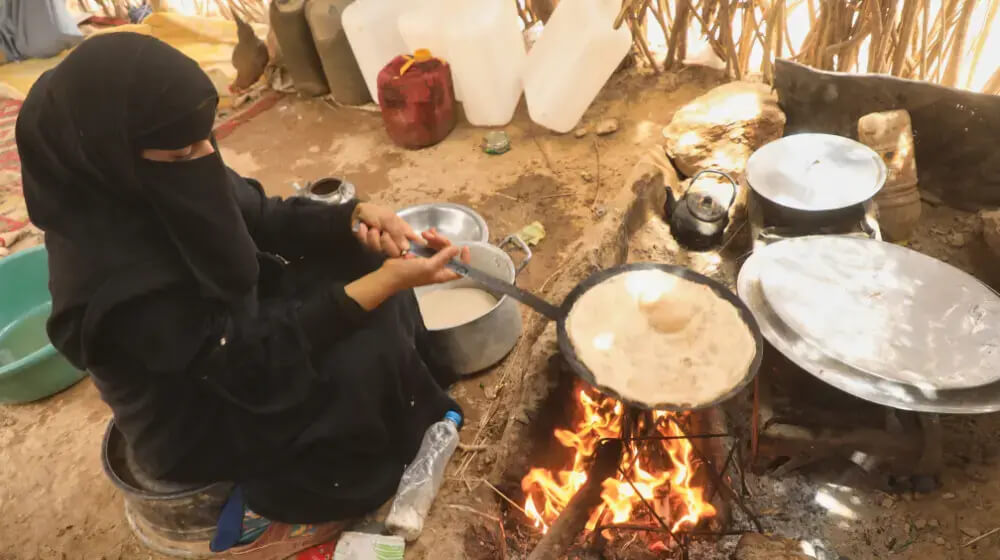
ABYAN/AL HUDAYDAH GOVERNORATES, Yemen — Fatimah* was forced to marry an older man when she was just 13 years old. Two years later, she gave birth to twin daughters.
“I dreamed of going to school like other girls,” she told UNFPA, the United Nations sexual and reproductive health agency. “Instead I became a wife before I had the chance to live my childhood, and a mother before I truly understood what that meant.”
Now 20, Fatimah described life with her husband as simple but stable, until the conflict erupted and years of crisis upended millions of lives. Many health facilities had to close and a shattered economy led to destitution and widespread hunger.
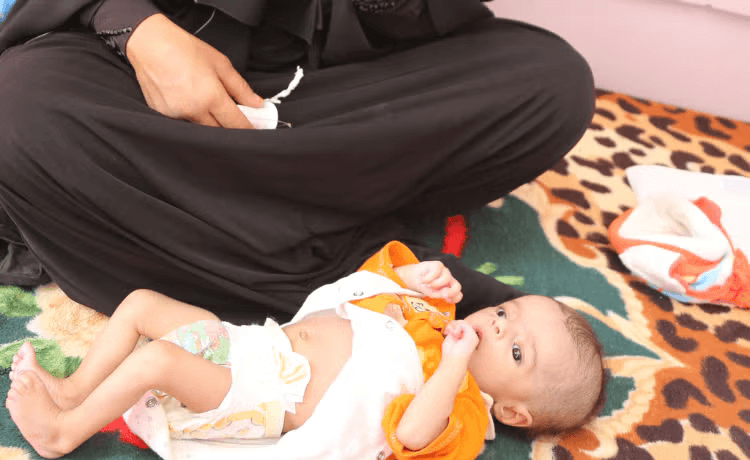
“We are witnessing a noticeable increase in cases of malnutrition among pregnant girls, especially those married at an early age,” said Reham, a counselor at a UNFPA safe space in Al Hudaydah Governorate. “Many arrive at health facilities suffering from low weight, anemia, and severe exhaustion, and their bodies are often not prepared to handle the demands of pregnancy.”
Yemen remains one of the world’s most severe and complex humanitarian crises, with more than 22 million people, half of them women and girls, in need of urgent assistance and protection this year. Fewer than two thirds of health facilities are fully functional, and of them only 20% provide maternal health services. UNFPA estimates that 1.3 million pregnant and breastfeeding women in Yemen are malnourished and 100,000 are displaced, increasing the risks of childbirth complications.
“Many women cannot afford transport or the medicines and supplements we prescribe,” said Amira*, a health worker in Abyan Governorate. “Some girls also face social restrictions that limit their ability to access healthcare in time. And some areas lack medical staff and properly equipped facilities.”
Malnutrition endangers mothers and newborns
Violence forced Fatimah and her family to move repeatedly—but one night floods ravaged the camp they were sheltering in, sweeping her husband away. Although he survived, he was left with post-traumatic stress that prevented him from working or supporting his family.
She suddenly found herself caring for her husband as well as her two young daughters—and discovered she was pregnant again. Living in a tent and with no source of income or health services, the family depended entirely on humanitarian assistance. Exhausted and anemic due to malnutrition, she said, “I feared for my baby more than I feared for myself.”
“Often, pregnant women arrive at health centers late in pregnancy or only when serious complications appear—complications that could have been prevented with early care,” continued Amira.
Fewer than half of Yemeni women give birth in a health facility and nearly 30% do not receive any form of prenatal care. Yemen has one of the highest maternal death rates in the region. A lack of information about the importance of regular prenatal check-ups also prevents girls from seeking care, and many depend on their family or husband’s approval to do so.
Almost one third of girls in Yemen are child brides, with rates highest among displaced populations. Over half the population is acutely food insecure, with many women and girls suffering from severe anemia and vitamin deficiencies. These affect not only the mother but can also lead to babies being born underweight and at greater risk of contracting illness and disease.
“The women also continue to perform strenuous household and outdoor tasks, including farm work, fetching water and collecting firewood, despite their weakness and malnutrition,” said Amira. “These conditions increase health risks for both the mother and the baby.”
Other complications on the rise are weight loss, preterm births, greater risks of bleeding during and after childbirth and poor milk production. “Young age can cause additional difficulties during labor,” said Amira. “If the case requires specialized intervention, she is immediately referred to a hospital capable of handling high-risk deliveries.”
But the effectiveness of referrals depends heavily on the availability of transport, proximity of health facilities, and the family’s ability to reach them in time—none of which are guaranteed.
Interrupted schooling, disrupted futures
In Al-Mahraq Village in the Abyan Governorate, Donia, 19, has a two-year-old daughter and is eight months pregnant with her second child. As a young girl she loved school and dreamed of becoming a teacher. But at just 8 years old, her mother and stepfather could no longer afford the costs and she had to stop going.
“I used to watch other children grow up in stable families while I struggled to adapt to a new and unsettled reality. At times, I felt like a burden to those around me,” she recalled.
Some 1.5 million girls in Yemen remain out of school, denying them their right to education and preventing them from breaking cycles of discrimination and inequality. Donia was married to an older man at age 15. “I was still thinking like a child and dreaming like any young girl. But I felt that my options were extremely limited.”
When she later found out she was pregnant, she said, “I felt both happiness and fear at the same time. How could I be a mother to a child while I was still a child myself, needing so much care and love?”
The struggle to access care
Donia’s current pregnancy has been extremely difficult. Without fresh, nutritious food she is exhausted and weak, but makes sure her daughter eats first. “Sometimes I go to bed hungry, thinking about what I will feed her the next day,” she told UNFPA. Donia has managed to visit a midwife and doctor a few times, but it was difficult and expensive, so she only went when her condition felt unbearable.
“I was relieved when I reached the health center, because there was someone asking about my health and my baby,” she told UNFPA, which supports the center. “But at the same time, I felt sad when I heard about the food and medicines I needed, knowing I might not be able to provide them. Sometimes I returned home carrying prescriptions more than actual solutions to my problem.”
UNFPA response
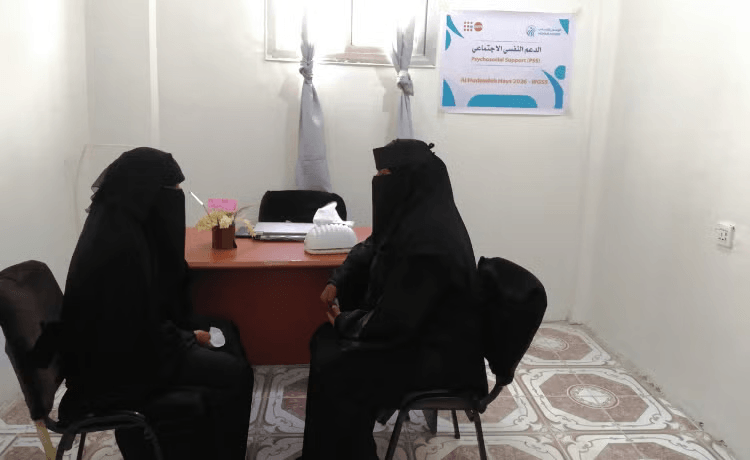
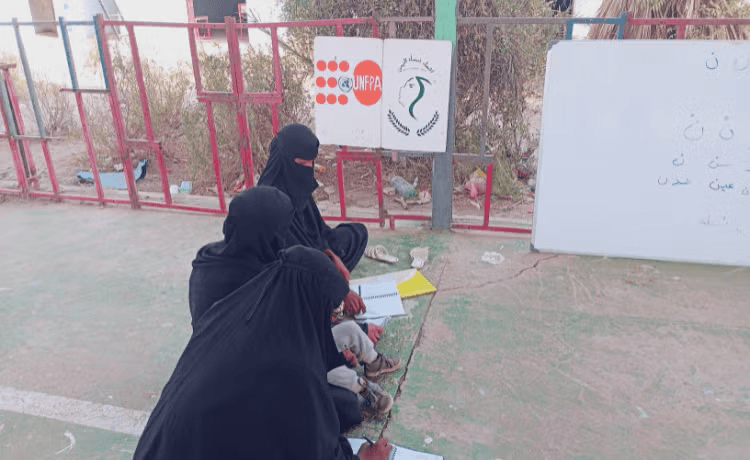
Fatimah received counseling and a medical referral from a UNFPA safe space, where she is attending literacy classes offered by the Yemen Women’s Union.
Donia is also attending classes at a safe space, determined to finish the education she was forced to abandon. “If things were different, I would continue my studies, pursue my dream of becoming a teacher, and provide a better life for my children and family,” she said.
Despite restrictive and challenging operating conditions, UNFPA has reached some 400,000 people so far this year with lifesaving reproductive health and protection services. UNFPA is the only organization offering specialized services such as women-led safe spaces, case management, mental health support and referral systems, and is the sole provider of reproductive health medicines in Yemen.
In 2026, UNFPA requires $71.9 million to provide critical reproductive health services to over 3 million people. As of August 27, only $13 million has been received, leaving a funding gap of over 80%.
*Names changed for privacy and protection