A survivor of violence becomes a voice for her community in Gaza
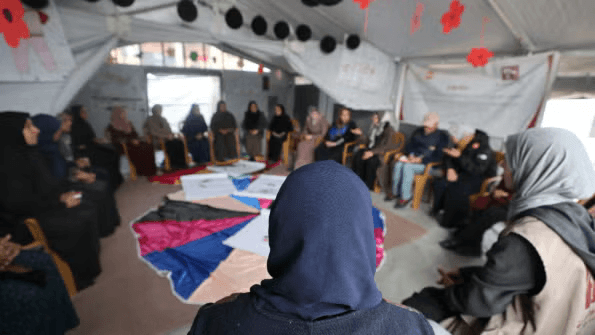
Gaza and the West Bank — “Imagine going from a woman who used to ask for food or water for herself, to someone speaking up for an entire camp.”
For Shams, a mother of three displaced within Gaza, that change once seemed unimaginable.
Displacement had stripped away her family’s most basic needs. At home, violence—physical and verbal—closed around her. By the time she looked for help, she was in deep distress and could not see a way forward.
A UNFPA safe space gave her that first opening—somewhere she could finally speak openly.
There, she began meeting with a counselor, working out a safety plan and finding ways to steady herself against the fear. Slowly, the confidence that violence had worn down started to return.
“I stopped giving up.”
Reaching that support changed things for Shams. But across Gaza, reaching a safe space at all is its own challenge.
When women cannot reach support, support moves closer
Around 1.7 million people are living across some 1,600 displacement sites in the Gaza Strip.
After nearly three years of war, repeated displacement, widespread destruction and damaged infrastructure have made access to even basic services increasingly difficult. For women and girls facing violence, fear, and economic hardship, traveling to seek confidential support can add yet another barrier.
And the gap remains significant. Safe spaces reach only around 17% of displacement sites across Gaza, leaving many women and girls without specialized services close to where they are living.
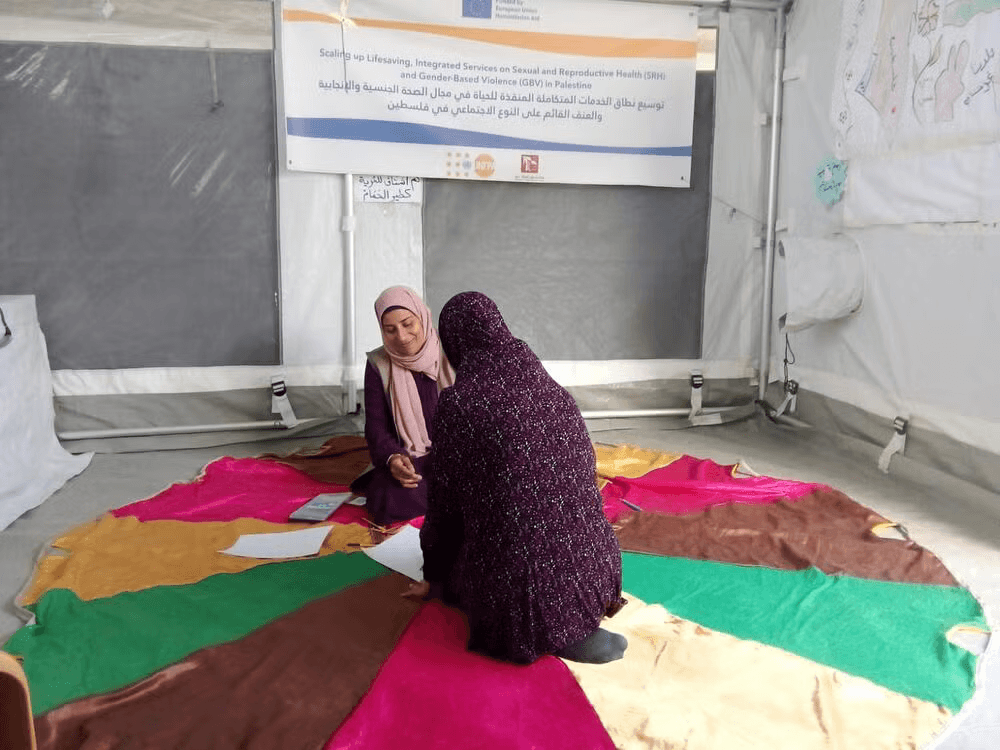
These spaces remain essential. But they depend on women being able to reach them—so the support is coming to them instead. UNFPA, the United Nations sexual and reproductive health agency, has introduced Gaza’s first mobile safe space, bringing confidential protection services closer to displaced communities.
As families move and needs shift, the space moves with them—bringing counseling, case management, information, and referrals closer to women and girls.
For women like Shams, that access can be the beginning of something much bigger.
From seeking support to speaking for others
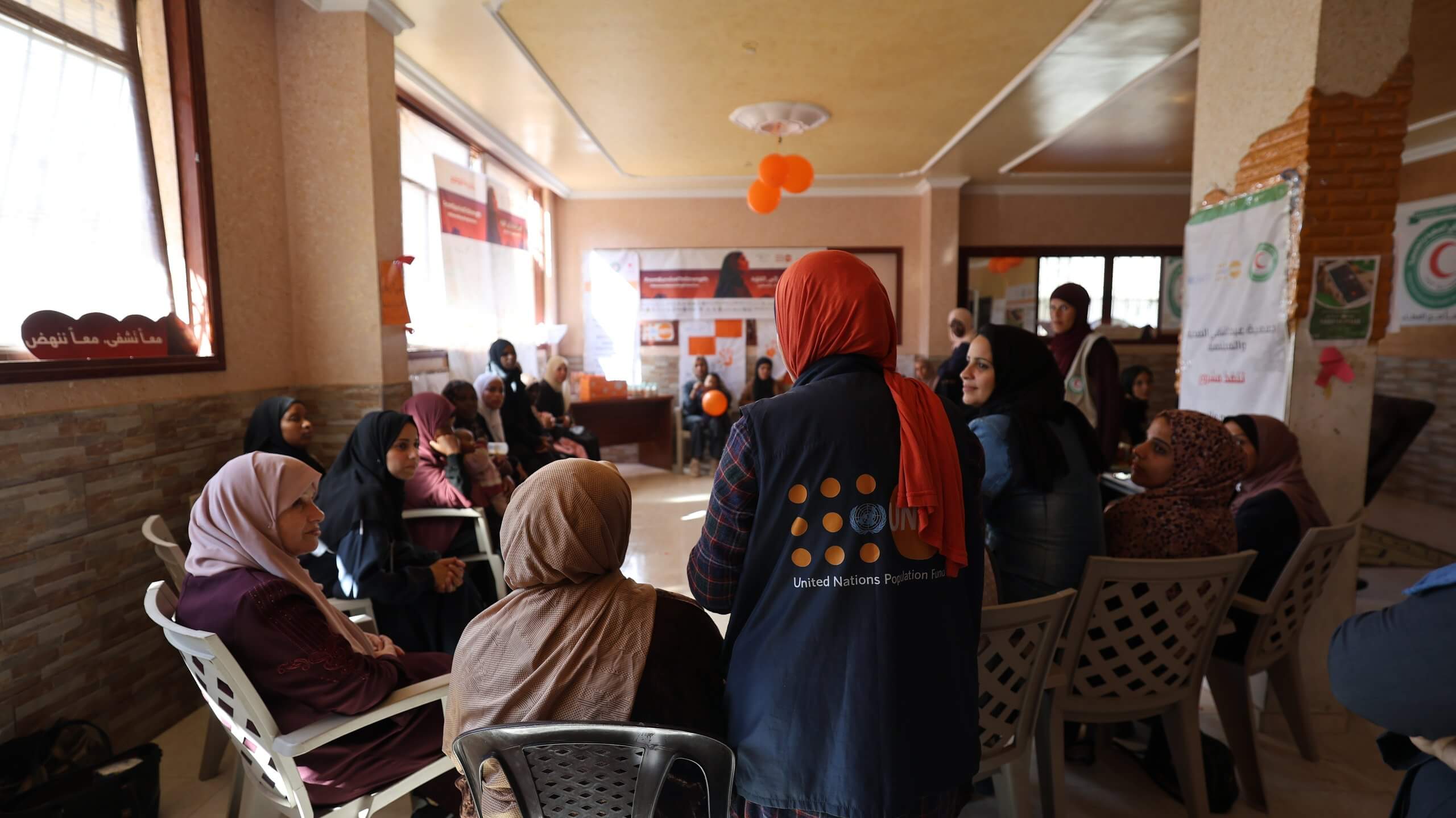
As Shams continued receiving support, the change began to show beyond the counseling sessions.
She became more confident in expressing herself and facing the pressures around her. Then something happened that showed just how far she had come: people in her displacement community began turning to her.
“People saw strength in me and believed I was capable of being their representative.”
The woman who had arrived overwhelmed and searching for help was now speaking up not only for herself, but for others.
Her journey shows why access to safe space matters. The support Shams received helped her cope with immediate distress, but it did not end there. It helped her rebuild enough courage to take on a role she could once hardly have imagined.
“The words I learned to repeat to myself made me finally feel safe again. My life became beautiful.”
However, the circumstances around Shams and the many other women and girls remain extraordinarily difficult. Displacement, uncertainty, and the pressures of daily life in Gaza have not disappeared.
But Shams is no longer where she was when she first reached out for support.
She came looking for a place where she could be heard. Today, she is helping an entire community be heard.