Gaza’s humanitarian workers are still showing up: Through heat, through scarcity, through everything
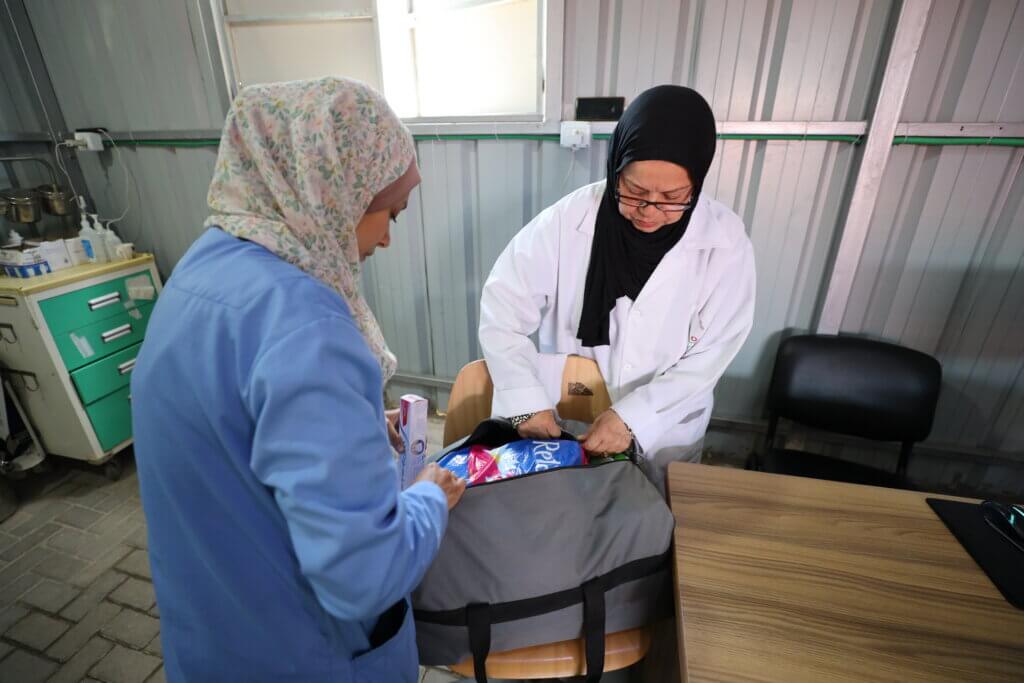
More than 1.9 million people across Gaza are still displaced, living in overcrowded tents and makeshift shelters. But after months of summer heat, those shelters have become almost unlivable.
The sweltering sun turns thin fabric and sheet metal into ovens by midmorning. There is nowhere cooler to go—no air conditioning, no shade, and often, no second set of walls. And for the women and girls inside them, either raising children, carrying pregnancies, or struggling through adolescence, the heat is one more thing to survive in a place where survival already takes everything.
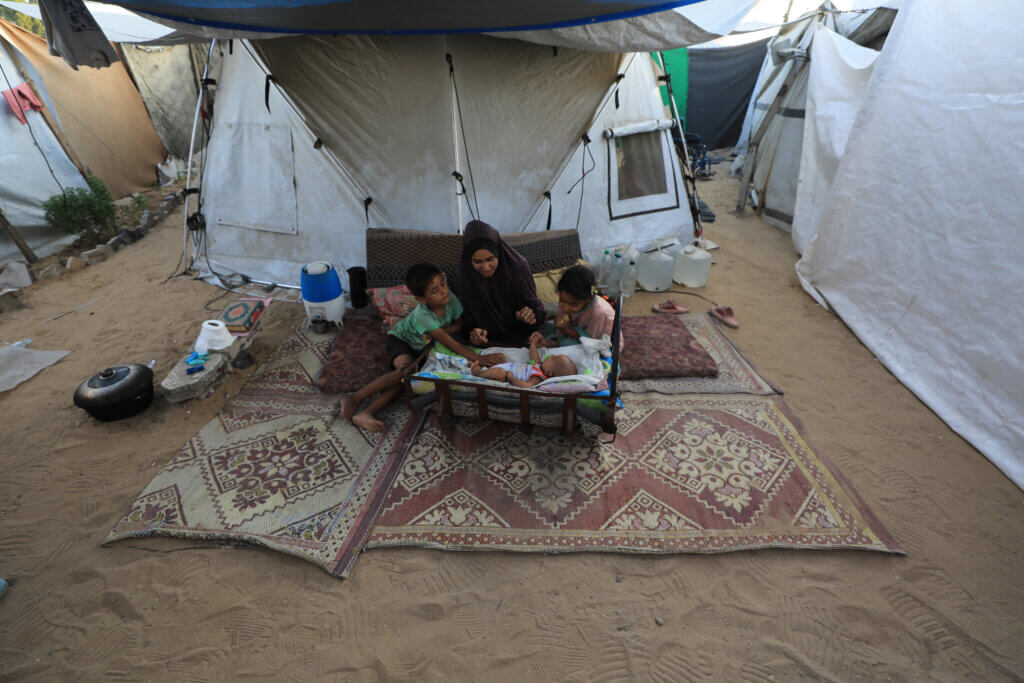
What heat and scarcity mean for women and girls
The war stripped away the basics of survival: clean water, electricity, and a solid roof and walls to protect families from the frigid winter months and relentless summer. Now, more than 70 percent of people rely on trucked water, and funding gaps are putting even that supply at risk.
Meanwhile, the supplies that could bring relief through this hot summer, such as shelter materials, fuel, and medical equipment, sit held up at the border by restrictions and long clearance procedures.
That scarcity falls hardest on Gaza’s women and girls. Around 700,000 of them are of menstruating age, and with most households facing severe water shortages, they are left to manage their periods without clean water, soap, or privacy.
The danger then sharpens further for anyone who is pregnant. Dehydration and heat raise the risk of complications; anemia and hunger deepen those risks, and the nearest functioning clinic may be a long walk away in temperatures that make the walk itself dangerous. The extreme heat has left Gaza’s women and girls in conditions no one should have to endure—making the work of humanitarian workers even more essential.
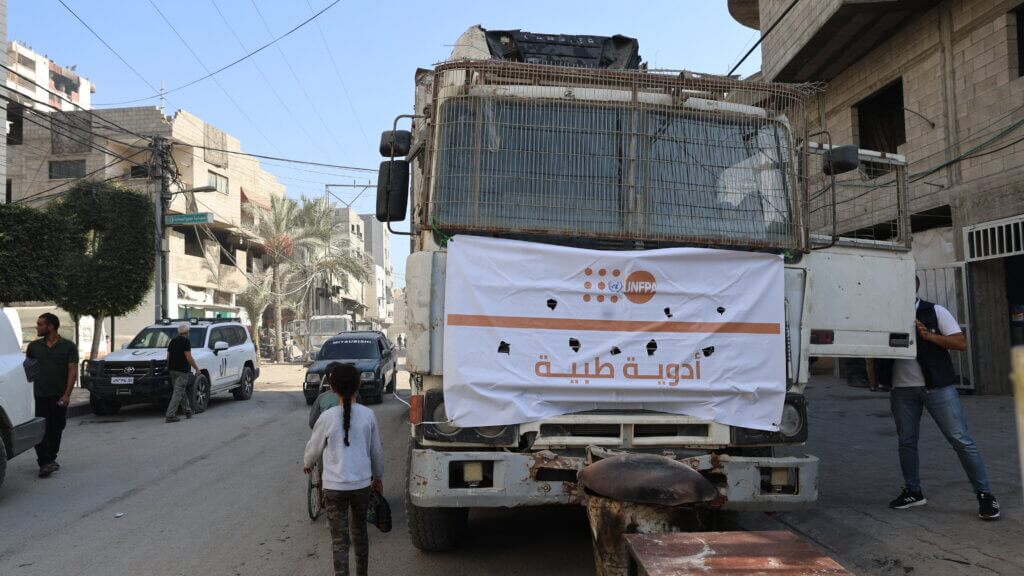
Despite conditions, humanitarian workers show up to help
But through the searing heat and dire conditions that have touched every single family, Gaza’s midwives, nurses, doctors, logistics officers, and drivers are still on the ground two years into the crisis.
Many of them are displaced, too. They live in the same tents, ration the same water, and grieve the same losses as the women and girls they treat. What sets their days apart is that they spend most of them working in the shelters and half-standing clinics where someone is waiting for their care.
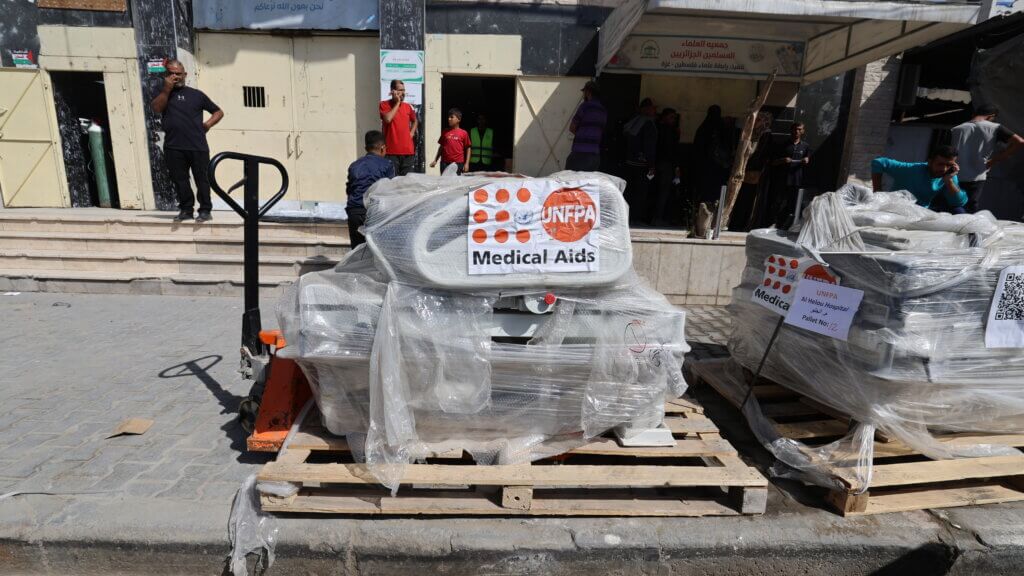
This is what World Humanitarian Day was made to recognize: people who are part of the very communities they serve, choosing to keep going, even when it would be safer to stop.
As the United Nations sexual and reproductive health agency, UNFPA has deployed health teams across Gaza to keep sexual, maternal, and newborn care going—in medical tents, in rehabilitated hospitals, and in the shelters where displaced families are living.
Hundreds of those aid workers are on the job right now, stepping in when when there is no one else because their care is what thousands of women and girls depend on.
The names and faces of aid workers showing up for Gaza
Mahmoud is a logistics officer in Deir al-Balah, who delivers UNFPA Mama Kits to new mothers across Gaza. He was forced from his own home and faces the same dangers the families he reaches do. Each Mama Kit he carries holds what a family cannot find anywhere else right now: diapers, postpartum pads, baby clothes, blankets, and soap—the ordinary essentials that keep a new mother cared for and her newborn safe through the first fragile weeks.
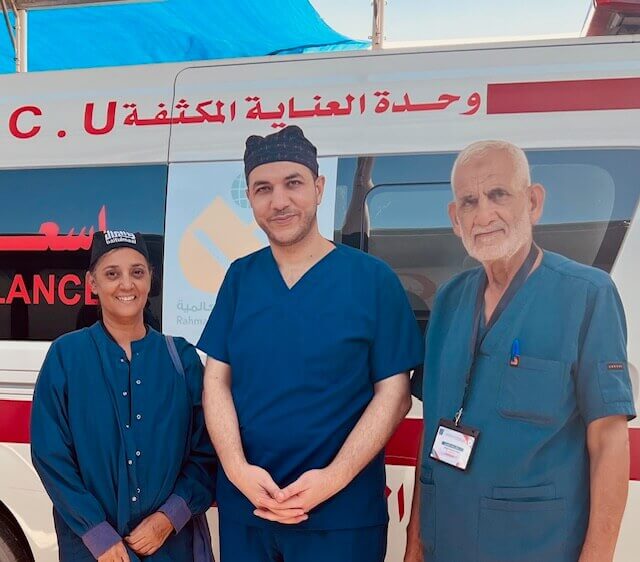
Dr. Ambereen Sleemi is a surgeon and a member of USA for UNFPA Leadership Council who has spent her career in crisis zones around the world. Gaza, she says, was different in one specific way: “There is no safe place in Gaza.”
She spent more than a year trying to get onto a medical roster for Gaza, arguing her way on when obstetric care kept being ranked as a lower priority. “I kept making the argument that we still need to take care of women,” she said. When a spot finally opened, a journey that should have taken three hours took fifteen—because they were stopped repeatedly at checkpoints.
She worked at Nasser Hospital operating on patients, amid bombings while having shortages of nearly everything a hospital needs, and working alongside fellow staff members who themselves were displaced and hungry. Then, months later, she went back to Gaza and delivered lifesaving care for a second time in the same year, through a winter so cold that her colleagues—who lived in tents, as most of Gaza still does—were treating women and girls for frostbite.
“UNFPA is one of the organizations delivering lifesaving care in Gaza—and one of the few who remain focused on pregnant mothers, women, and girls.” Dr. Sleemi shared with us. They provide Dignity Kits that are one of the few sources of menstrual health products. They deliver nutrients and vitamins to pregnant and breastfeeding mothers. They are there.”
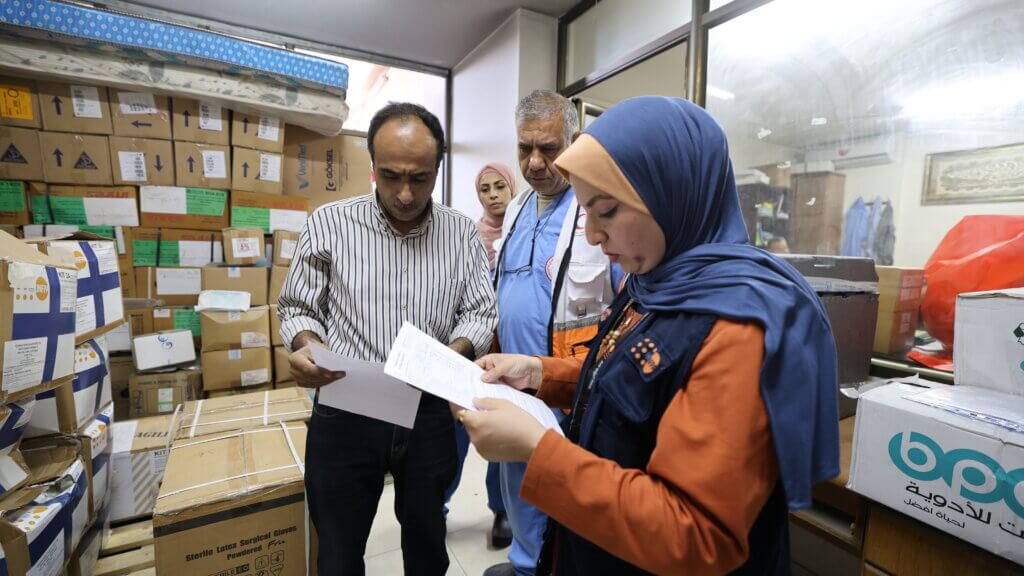
This World Humanitarian Day, care reaches Gaza because of supporters like you
The work of these people like Mahmoud and Dr. Sleemi has never carried out more risk. The last three years are the deadliest on record for humanitarians, and World Humanitarian Day (August 19) marks the 2003 bombing in Baghdad that killed 22 aid workers.
More than two decades later, reaching people in crisis has only grown more dangerous. Yet, the aid workers in Gaza go back to work each morning anyway, because the family in the next tent is waiting for their help.
But, they can’t do it alone. When your gift keeps a logistic officer moving or a midwife supplied, you become part of how that care reaches families.
Right now, through August 19th, your generosity is doubled, reaching twice as many women, girls, and newborns in Gaza—and supporting the aid workers who deliver their care.
Will you rush a lifesaving gift today and double your impact before the match expires?