Honoring AAPI Heritage Month: Reaching women and girls across Asia and the Pacific
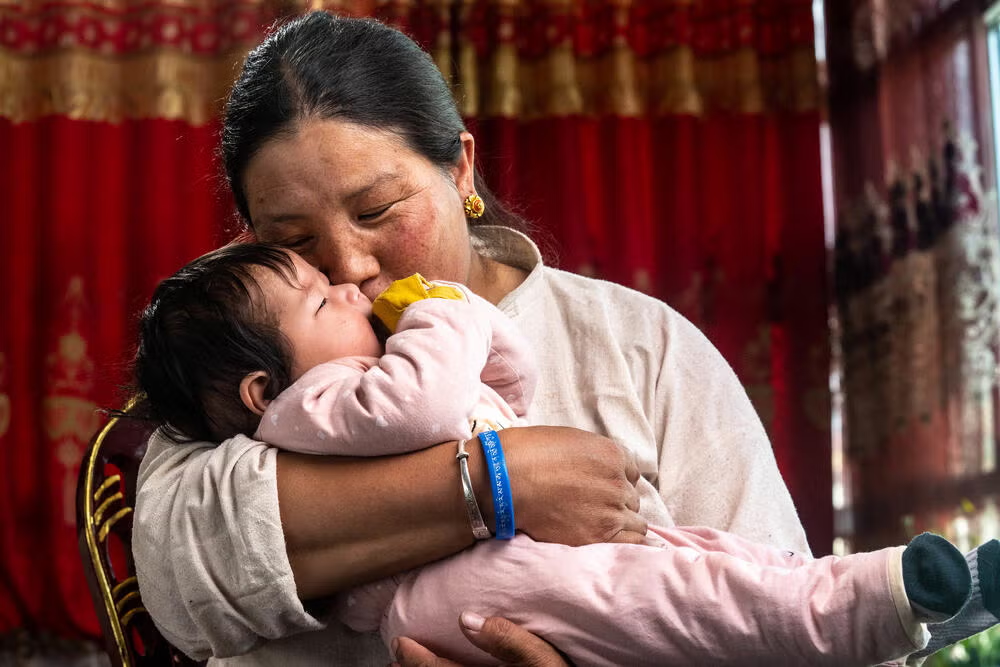
This May, as the U.S. celebrates Asian American and Pacific Islander Heritage Month, we’re taking a closer look at the lives of women and girls across the region and what your support is making possible there.
Asia and the Pacific is a region of extremes. Spanning the world’s largest continent and the smallest island nations of the Pacific, this region contains:
36 countries, from the most populous nations of India and China to tiny island states like Tuvalu
4.3 billion people, who make up 60% of the world’s population
The most disaster-prone area on the planet
More than half of the world’s young people, aged 10 to 24
Women and girls across Asia and the Pacific face challenges shaped by geography, economies, and traditions that span generations. Here are three stories of people your support has reached across the region.
When a typhoon meets a due date in the Philippines
In September 2025, Typhoon Bualoi tore through the Philippines, affecting more than 657,000 people across Masbate province—including 11,000 pregnant women. Health facilities were damaged, roads became impassable, and power outages cut off access to care.
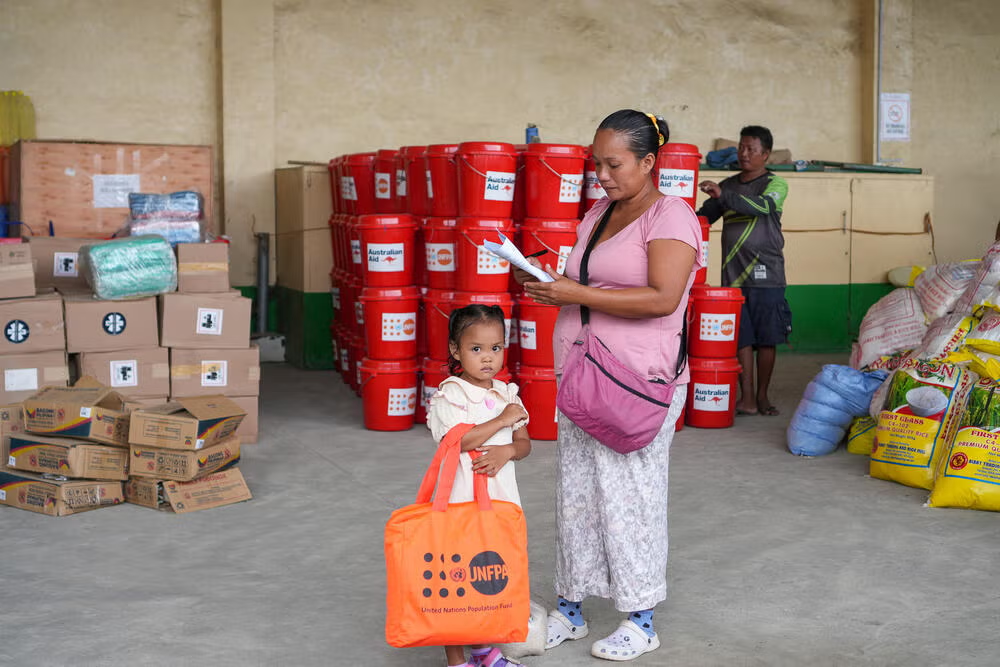
In a remote farmland of Aroroy, Fredie was due any day. When the storm hit before dawn, her husband wrapped their three-year-old daughter in plastic to shield her from the rain, and the family ran to a concrete shelter. They waited out the typhoon, hoping Fredie wouldn’t go into labor in the middle of it.
“I was so scared for our lives,” she said. “I am due this month.”
When the storm passed, they returned to their home to find that the roof had been torn off and the kitchen was destroyed. In the days that followed, a local health worker reached Fredie to check on her pregnancy and told her about a distribution of UNFPA Mama Kits happening nearby. She was the first to arrive.
Each Mama Kit is stocked with clean delivery supplies, baby clothing, and blankets—the essentials for a safe birth when hospitals are damaged and power is out. Through UNFPA Philippines, a total of 662 Mama Kits were delivered to mothers in need in the aftermath of the typhoon.
Shifting the conversation in Bangladesh
Across South Asia, two in five girls become child brides. In parts of Bangladesh—especially in the Rohingya refugee camps of Cox’s Bazar—up to 28% of girls marry before 18 because of poverty, displacement, and tradition.
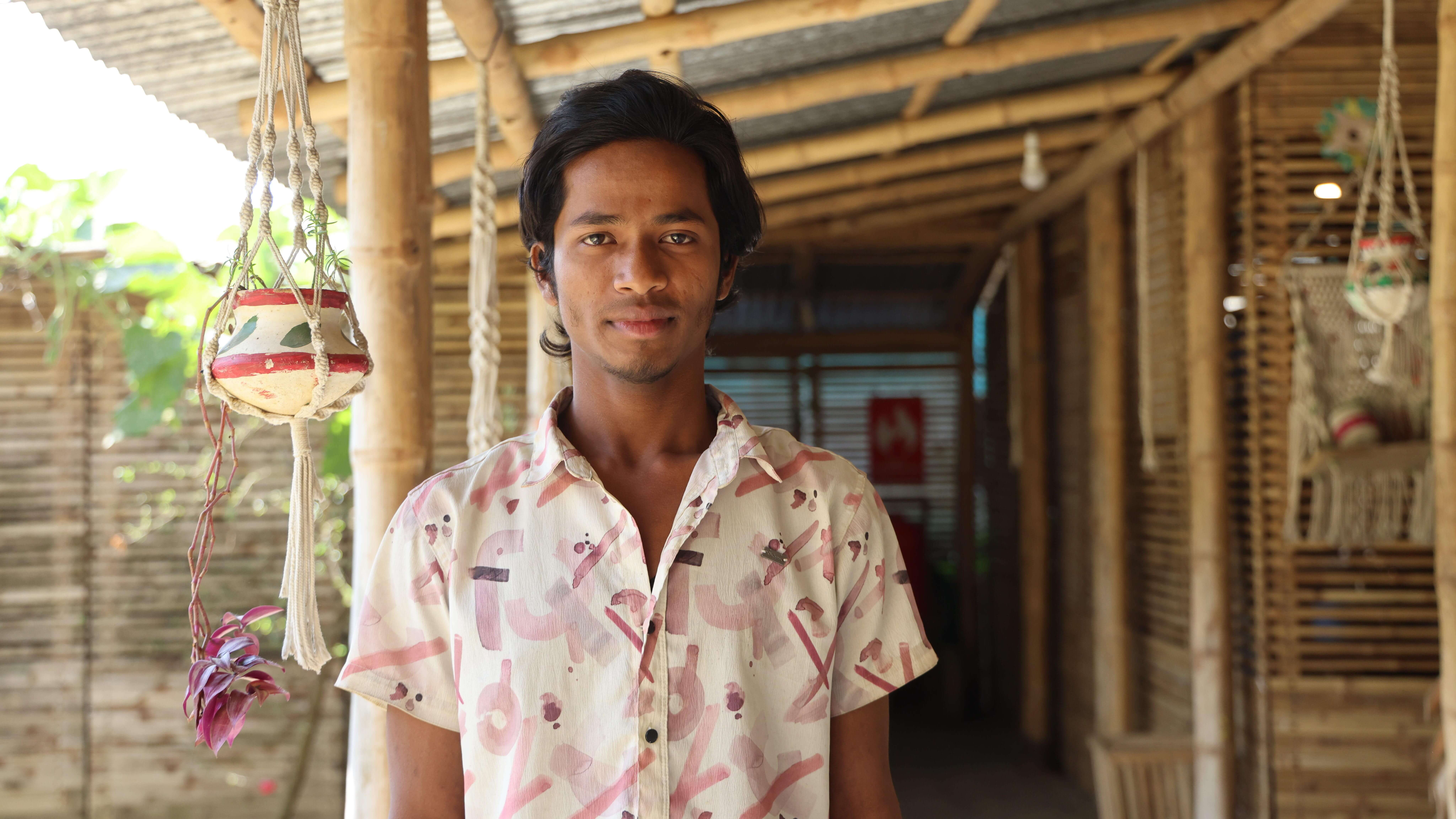
Imam has been a part of SASA! for five years. He sits with families when he thinks a young person may be at risk, while listening and explaining what early marriage can mean for a young girl’s education, health, and future.
Before SASA!, Imam had a dream of becoming a doctor. In the refugee camps where he lives, there isn’t a single doctor from his own community, and those who earned degrees left for other countries. “My community needs a doctor,” he said. “If I become one, I can help my community, my relatives, my family.” His path still remains uncertain, but SASA! gave him a way to start that work now.
His training helped him jump into action when he learned that his 17-year-old friend, who was still in school studying, was making wedding preparations. Before waiting on someone else to act, Imam spoke to his friend and parents immediately upon hearing the news.
With patience, he listened, answered questions, and explained what he learned about how early marriage can interrupt education, strain a family financially, and push young people into adult lives they aren’t ready for.
“I said, if my friend gets married now, he will have a child. How will he care for a child when he is not working, not earning?” Imam recalled the conversation. “Your family will face problems.”
Slowly, the family reconsidered. The marriage was canceled, and his friend is still in school today.
Imam continues this important work today. He speaks with peers about child marriage and other violent practices with empathy, because he knows the pressures young people in the camps face. He visits families when he thinks a young person may be at risk, hoping to use what he’s learned before harm takes place. Although his dream of becoming a doctor still lives on, he is already doing what he’s always wanted to do: helping his community prevent harm.
A region growing older and more female
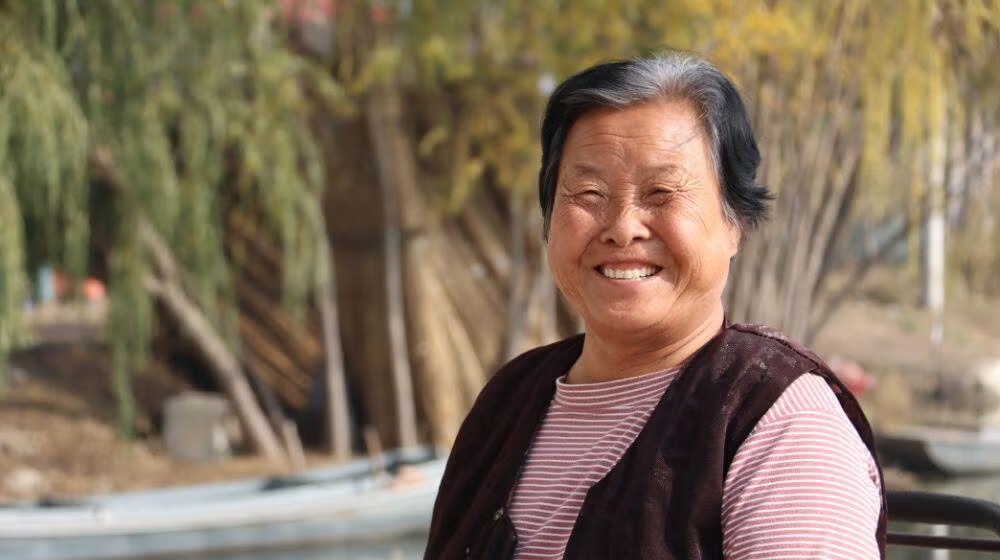
By 2050, one in four people across Asia and the Pacific will be over 60. In China, that figure climbs to one in three. Most of them will be women—simply because women live longer.
This demographic shift is reshaping economies, healthcare systems, and family life across the region. But many older women, especially those in rural areas or without digital access, risk being left behind.
As Nadia Rasheed, UNFPA’s Representative to China, has written, what’s needed is to ensure “people can age with dignity, health and security,” by investing across their lifespan, “from education and employment to health systems and social protection.”
How you can be part of this
Across the Philippines, Bangladesh, and China, and 33 other countries, your support is reaching women and girls during storms, in classrooms, and across a lifetime of care.
Last year, across Asia and the Pacific alone, supporters like you made it possible to:
Reach 12.5 million people with lifesaving sexual and reproductive healthcare.
Prevent 20,500 maternal deaths thanks to sustained investment in midwives.
Train 300 new midwives, delivering care to the hardest-to-reach communities.
But we’re counting on you to keep that progress going. Your gift, one-time or recurring, directly supports our work in Asia and the Pacific and around the world—you can give here. However, if giving isn’t where you are right now, you can still support our work by following us Instagram and TikTok to stay connected with our community, or by sharing this story with a friend or family member to spread the word about what’s happening across the globe.