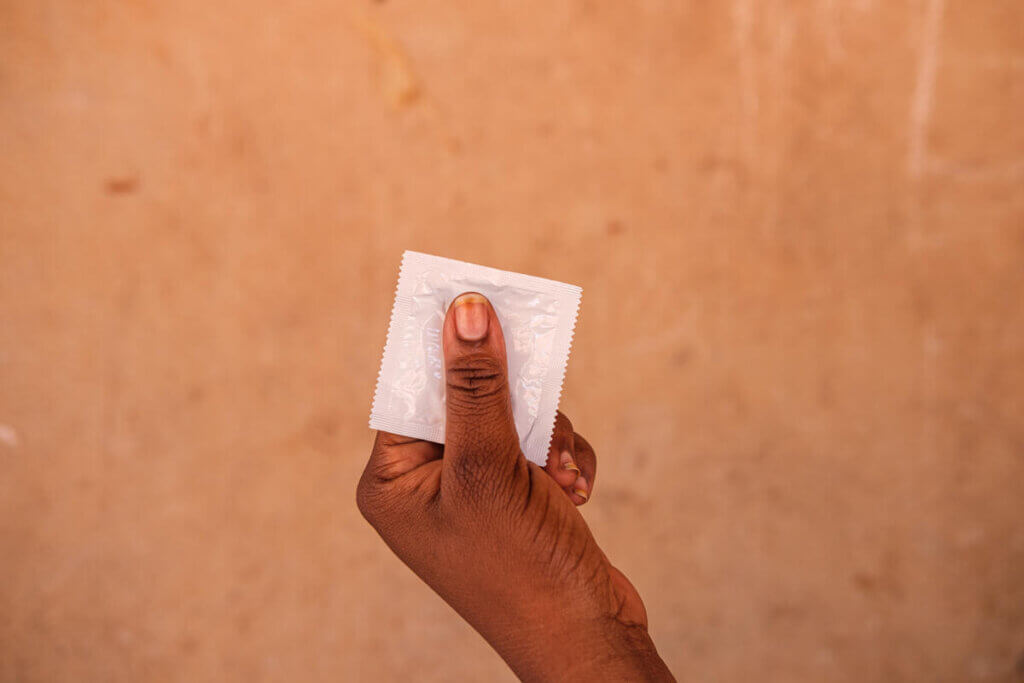
Did you know the UNFPA is the largest distributor of condoms in the world? Access to condoms, birth control, and family planning plays an essential role in women’s empowerment globally.
With your support, we distributed over 1 billion condoms in 2025 alone.
Condoms are an essential part of family planning conversations. However, across the world there are varying misconceptions about condoms.
Sometimes these myths are perpetuated by religious or cultural beliefs about the sexuality of young people. Other times, young people who lack access to sexual and reproductive health information misunderstand how condoms work and spread those ideas to their peers.

Facts and Myths:
1. Myth: Condoms are unreliable and ineffective.
FACT: When used correctly, condoms are the only contraceptive method that provide triple protection: protection against HIV and other sexually transmitted infections, protection from conditions like yeast infections, urinary tract infections, and bacterial vaginosis, and protection from unintended pregnancy.
In fact, in East and Southern Africa, the region with the highest prevalence of HIV, condoms are responsible for averting over 60% of all new HIV infections.
2. Myth: Sex does not feel as good with a condom.
FACT: When both partners feel safe—less worried about STIs or unintended pregnancy—sex is better. Talking openly about expectations and boundaries before sex builds trust and increases satisfaction. And condoms come pre-lubricated for comfort. Peace of mind is part of pleasure.
3. Myth: Two condoms are better than one.
FACTDoubling up actually increases friction, which can cause one or both condoms to tear. Having a second condom on hand is a smart option in the event that the condom is initially put on incorrectly, or if both partners wish to have sex again.
4. Myth: Condoms don’t fit.
FACT: Condoms are highly elastic and designed to accommodate a range of sizes and shapes. They also come in a wide variety of styles—different sizes, textures, flavors, and colors. Finding the right fit may take some experimentation, but one bad experience isn’t a reason to give up on condoms altogether. Talking with your partner about preferences is a good place to start.
5. Myth: Using condoms signals promiscuity.
FACT: The opposite is true. Research shows that comprehensive sexuality education, including information on condom usage, actually delays sexual activity. And when young people do become sexually active, they’re more likely to have safe, satisfying, and consensual experiences. Condoms aren’t just for casual sex: couples in long-term relationships use them too, because they’re the only protection that prevents both STIs and pregnancy.
6. Bonus Myth: Condoms are only for penises.
FACT: Even though male condoms are what most people think of first, we also provide female condoms, a discreet way women can prevent pregnancy and protect themselves from infections. In situations where women are at risk of sexual violence or have little ability to negotiate safe sex, female condoms put women’s health back into their own hands.

The bottom line: condoms are safe, effective, and accessible. They can be used by men, women, young people, long-term couples, and LGBTQ+ people alike. They’re the only protection against certain STIs, including HIV, chlamydia, and gonorrhea.
Talking about condoms, and making them available, doesn’t increase sexual activity. It just makes sex safer.