“Kinder, stronger, more equal”: Imagining a world where no mothers die
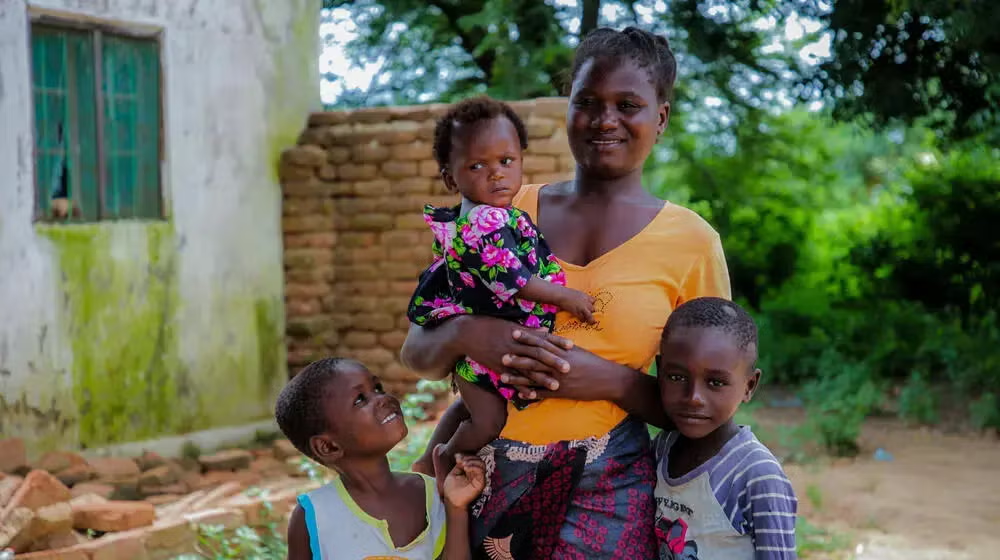
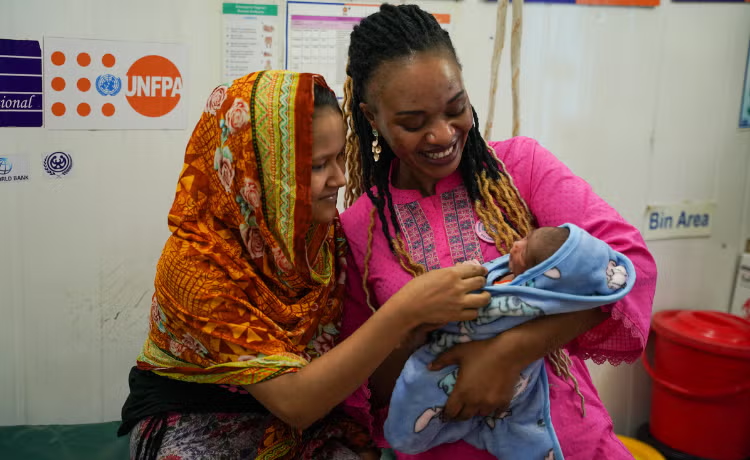
“When a mother dies, a family does not only lose one person–it loses its center,” Kindness, a midwife in Cox’s Bazar, Bangladesh, explained.
Originally from Cameroon, Kindness has been deployed to humanitarian emergencies around the world by UNFPA, the United Nation’s sexual and reproductive health agency. From Yemen to Sierra Leone, she has helped women deliver babies amid conflict, disease, and hunger.
“As a midwife, I have learned that saving a mother’s life means saving much more than one life,” she said. “It means protecting children from losing their first source of love, keeping families together, and preserving the strength and hope of communities.”
Tragically, more than 700 women die every day, on average, from causes linked to pregnancy or childbirth. Almost all of these deaths are preventable.
“As a midwife, I have seen that safe childbirth is possible,” Kindness said. “When women are supported, when midwives are empowered, and when health systems work, mothers survive and families thrive.”
To honor the world’s mothers, we asked midwives about their memories of helping women survive the journey to motherhood. And we asked how the world would be different if no woman died in the act of creating life.
What is lost when mothers die
Researchers have long known that a mother’s death greatly increases the risk of a child’s death, too. The children who survive are less likely to be well fed, well educated, and they are more likely to experience poverty–with effects that resonate across generations.
“When a mother dies, children lose care, families lose stability, and communities lose hope,” Kindness said. “The emotional wound is deep, but so are the practical consequences: who will feed the newborn, who will care for the older child, who will support the household, and who will carry the grief?”
But the broader societal impacts of maternal mortality have not yet been fully explored.
The women and girls who die in pregnancy and childbirth have, themselves, enormous potential to contribute to the world; a mother’s love is lost, but so too are her ideas, her industriousness, her creativity. “For me, maternal death is never just a medical event. It is the loss of a woman’s future, a family’s anchor, and a community’s hope,” Kindness explained.
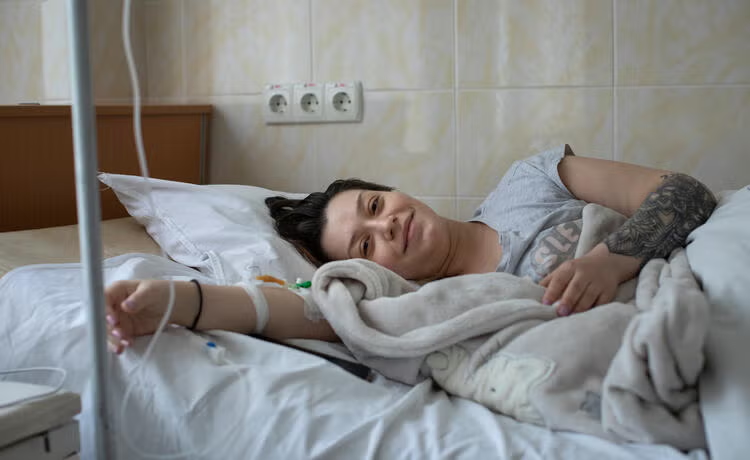
Too often, the mothers who die are themselves still children, with an entire lifetime to live, emphasized Elestina, a midwife from Malawi now working with UNFPA in Cox’s Bazar.
“My classmate in secondary school [was] brilliant, full of dreams and beautiful. Everyone believed she had a bright future ahead of her,” Elestina said. Her classmate died after marrying and becoming pregnant at age 16. “A young girl with so much potential was gone before she ever had the chance to truly live her life.”
History is filled with the promise of women and girls lost too soon: Mary Wollstonecraft, an English philosopher and women’s rights advocate, died after giving birth in 1797. Cristina Farfán, a champion of women’s education and journalism in Mexico, died in childbirth in 1880. Raden Adjeng Kartini, a women’s rights and education advocate and National Hero of Indonesia, died after giving birth in 1904.
And these preventable deaths continue: Grace Kaudha, a Ugandan legislator, died of pregnancy complications in 2017. Tori Bowie, an Olympic gold medalist, died of complications from childbirth in 2023 in the United States.
An estimated 260,000 maternal deaths take place every single year, more than 60 percent of them in countries facing crisis or fragility. Yet even in affluent and middle-income countries these deaths are too common. Between 2000 and 2023, maternal mortality dropped by 40 percent globally, but it increased in 16 countries. And it grew most significantly in four: the Bolivarian Republic of Venezuela, the Dominican Republic, Jamaica, and the United States.
Reversing the trend
But it does not have to be this way. Kindness and other midwives spoke of their determination to help all women receive lifesaving care during pregnancy and childbirth. They know it is possible because they tend to the most vulnerable women and girls.
Noor, a midwife in Yemen, recalled meeting Wijdan, a child bride of 16 years old who was malnourished, displaced, and on the cusp of giving birth. “She was just a child herself,” Noor said. “She was so scared.”
“I didn’t think I would survive,” Wijdan told UNFPA, after her harrowing delivery. “But thanks to the midwife, I did.”
Midwife Elena said she is inspired to help those most in need–including women and girls struggling against patriarchal norms. “It’s the man who decides whether or not the woman goes to a [prenatal] consultation,” she said. “Gender inequality means women don’t have the right to seek out healthcare.”
Many make do with limited resources. Goitom, a midwife in Ethiopia, described delivering babies amid the country’s recent conflict: “We helped 115 women deliver their children safely in difficult conditions, often using plastic bags as gloves and without oxytocin to prevent excessive bleeding.”
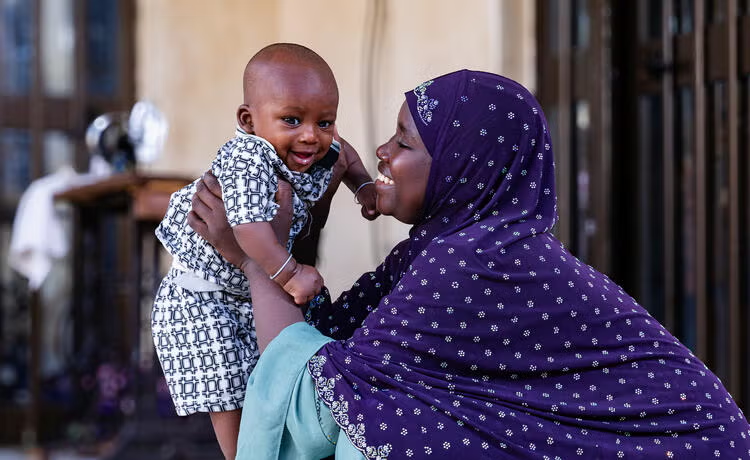
But with the proper support, all the midwives expressed confidence that mothers can be saved.
“We can reverse the trend,” Boame, a midwife in northern Togo said. UNFPA supports her health facility with training through the global ‘2 Hours to Life’ partnership. “We manage high-risk pregnancies, we act quickly, and we save lives right here.”
The world as it could be
“I remember women who had dreams far beyond the delivery room,” Kindness said. “Women caring for entire families, mothers running small businesses, young students, adolescent girls who wanted to return to school, and mothers who simply wanted to hold their babies and go home safely.”
These women and girls–like the philosophers, advocates and leaders before them–have so much to offer. “If no mothers died in pregnancy or childbirth, the world would be kinder, stronger and more equal,” Kindness emphasized.
“More children would grow up with their loving mothers. More families would remain whole. More women would live to fulfill their dreams, raise their children, lead in their communities, and contribute to society.”
“The world would be more whole, more stable,” added Elestina, “and filled with deeper happiness.”