Gambian mothers and faith leaders unite against child marriage
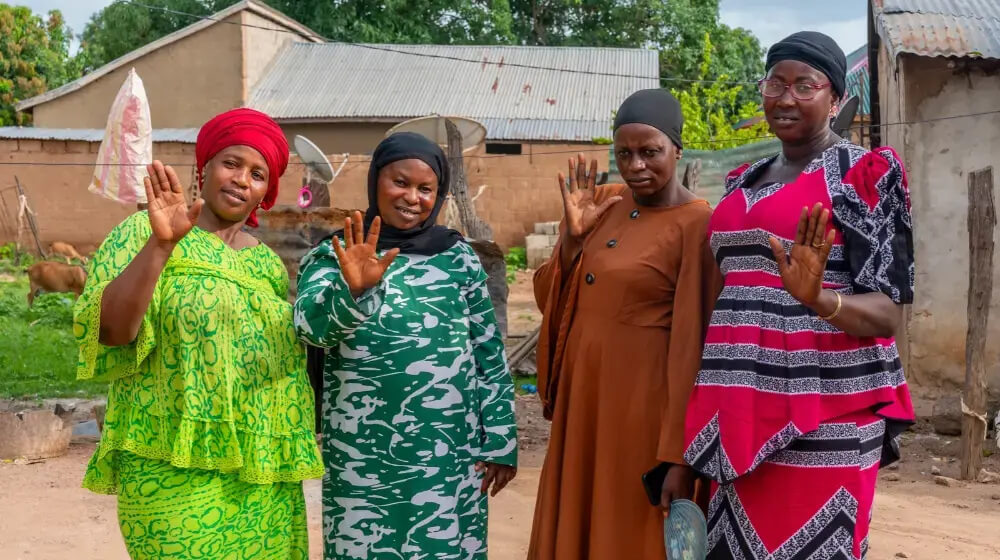
JARRA SOMA, The Gambia — Fatou was still a schoolgirl when the future she imagined for herself began to slip away.
She was in 7th grade, around 13 years old, in the town of Jarra Soma in The Gambia’s Lower River Region, when her mother died. Three years later, she lost her father.
With no parents and little financial assistance, she could no longer remain in school. Family members pushed her to marry a much older man—someone she remembers as being almost her father’s age—so she would have someone to support her.
“At 16, I was married,” she told UNFPA, the United Nations sexual and reproductive health agency. “I didn’t have the opportunity to choose the future I wanted.”
Years later, when Fatou became a mother, that memory shaped the choices she made for her own daughters. When she was pressured to marry them off at a young age, she refused.
“Whenever people talked about marrying my daughters early, I remembered myself at 16,” she said. “I did not want them to go through what I went through.”
Globally, 1 in 5 girls is still formally married or in an informal union before age 18; every 3 seconds, a teenage girl gets married somewhere in the world. Girls who are married as children are much less likely to complete their education or enter the workforce, and they face higher risks of teenage pregnancy and violence. Child marriages also cost the world up to $175 billion every year in lost productivity and health risks.
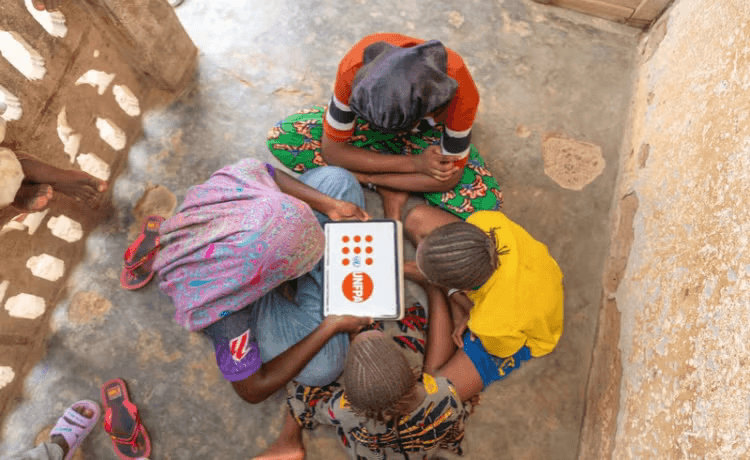
The risks of interrupted schooling
Fatou’s experience reflects a wider challenge in The Gambia, where about a quarter of women ages 20 to 24 were married or in a union before age 18.
Pushing back against pressure to marry her daughters young wasn’t straightforward: with limited income, Fatou started a small business and used her earnings to support their education. Although she could not return to that classroom herself, she was determined her daughters would remain in theirs.
She also joined a mothers’ club, an initiative supported by UNFPA where women work together to identify girls at risk of child marriage, engage their families in discussion, and encourage them to keep their children in school. It is one of an estimated 3,500 mothers’ clubs in the country.
The mothers’ club has helped other girls avoid the same path. When members learned that one father in the community was arranging a marriage for his 13-year-old daughter, and they quickly intervened.
“When I heard she was only 13, I could not keep quiet,” said Fatou. “I knew where that road could lead because I had walked it myself.”
The mothers’ club approached community leaders and the girl’s family, sharing information about the consequences child marriage could have on her education, health, and future. Ultimately, the girl did not marry and remains in school today.
“If I can help even one girl stay in school instead of being married as a child, I will continue to speak up,” Fatou told UNFPA.
Raising awareness through faith and community
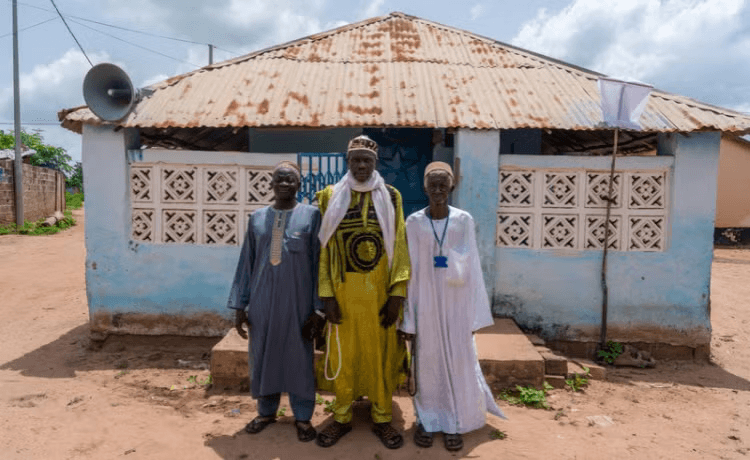
Every Friday during prayers in the village of Njaba Kunda, in the North Bank Region, Imam Modou, a Muslim religious leader, speaks to fathers, brothers, elders, and young men in his community about their responsibility to help girls avoid harmful practices that can alter the course of their lives.
“People listen to us because they trust us as religious leaders,” he explained. “That trust comes with responsibility. If something is harming our girls and we remain silent, then we are not doing enough to protect them.”
According to the UNFPA-UNICEF Joint Program on the Elimination of Female Genital Mutilation, some 150,415 girls in The Gambia are at risk of child marriage between now and 2030—unless action and investment to end this practice are dramatically accelerated. The risks are even greater in rural communities, where surveys show that 20% of teenage girls have begun having children, compared with 11% in urban areas.
For Imam Mamba, these issues must extend beyond policy discussions and reach into family homes, classrooms, community conversations, and places of worship. “If someone brings a child to me for marriage, my answer will remain no,” he said. “I would rather use my voice to protect her childhood than use my position to help take it away.”
Accelerating progress
Imam Mamba and other imams have completed a UNFPA-supported training with The Gambia Committee on Traditional Practices Affecting the Health of Women and Children, aimed at equipping religious leaders with knowledge on how to challenge harmful practices and advocate for the health, dignity, and rights of women and girls.
Today, they not only educate their communities about the harms of child marriage; they also speak out about female genital mutilation, another harmful practice that can affect girls long after childhood.
In The Gambia, 73% of women ages 15 to 49 have undergone female genital mutilation, with almost two-thirds subjected to the practice before age 5. Both female genital mutilation and child marriage are rooted in long-standing beliefs that give men more power than women and girls, and the former is sometimes considered a prerequisite for the latter.
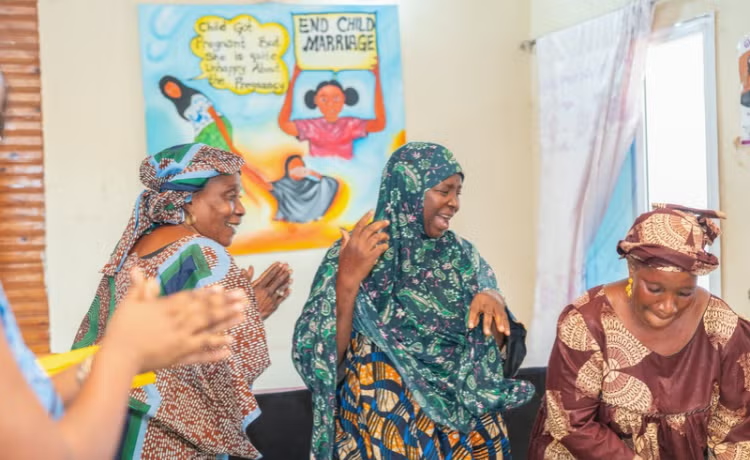
UNFPA is working with grassroots leaders at all levels. Young people are engaged to become leaders and champions through school programs, dialogues, and community pacts on the issues of child marriage, teenage pregnancy, and female genital mutilation. Elders are being reached through grandmothers’ clubs and intergenerational dialogues. Traditional storytellers and musicians, called griots, are also joining the effort to champion girls’ rights.
These efforts must be scaled up significantly. It is estimated that, over the next five years, more than 70 million girls around the world will be at risk of child marriage. Every one of those girls deserves to shape her own future, not become a child bride.
“A girl who is still a child should be protected and allowed to grow,” Imam Mamba told UNFPA. “Marriage should never be the reason her childhood ends.”