“We watched them die before our eyes”: Health workers in Sudan describe dire conditions
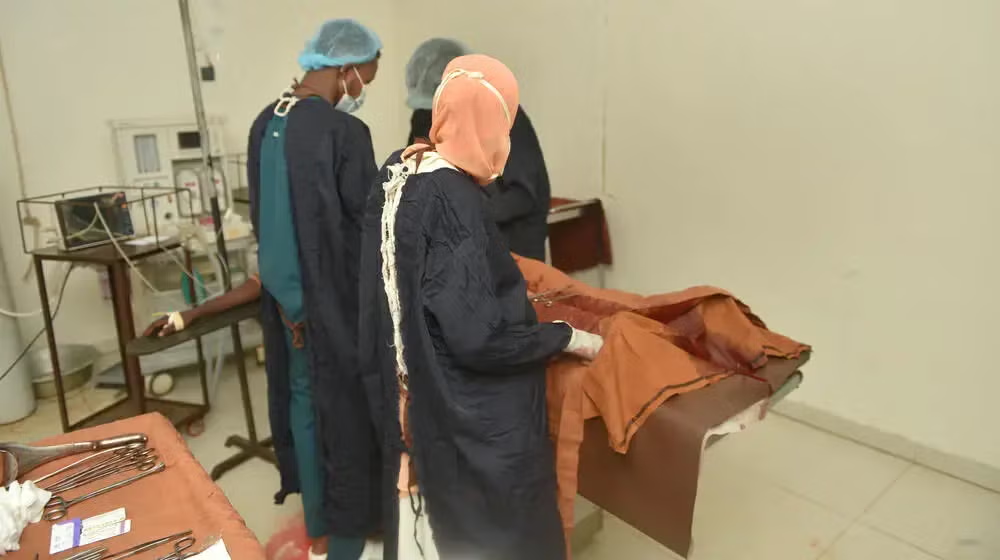
NORTH KORDOFAN STATE, Sudan – “One of the most difficult experiences during the war involved a mother who delivered triplets, all of whom were premature and required intensive care,” said Dr. Hasan Babikir, director of El-Obeid Maternity Hospital in Sudan’s North Kordofan State.
“They were referred to a pediatric hospital, but no beds were available. We had to watch two of the babies die before our eyes.”
El-Obeid Maternity Hospital has come under increasing pressure as tens of thousands of people—many of them vulnerable and in dire need of healthcare—flee the violence engulfing neighboring South Kordofan State. As the only referral hospital in western Sudan, it is care that health workers are struggling to provide.
“There’s a severe shortage of surgical and normal delivery equipment, as well as essentials such as antibiotics, surgical sutures, and gloves,” Dr. Babikir said. “This forces us to buy them from the market at very high prices.”
The city of El-Obeid has come under frequent drone attacks, with multiple strikes against health facilities that have killed and injured health workers and patients. The maternity hospital currently serves over 230,000 displaced people, most of them women and girls facing violence, hunger, and a near total lack of healthcare.
In February, an average of 25 babies a day were delivered at the hospital—a steep rise from the usual 17 per day. Yet ongoing supply shortages, overcrowding, power outages, and high fuel costs make operating on patients extremely challenging—and at times impossible.
A growing maternal health crisis
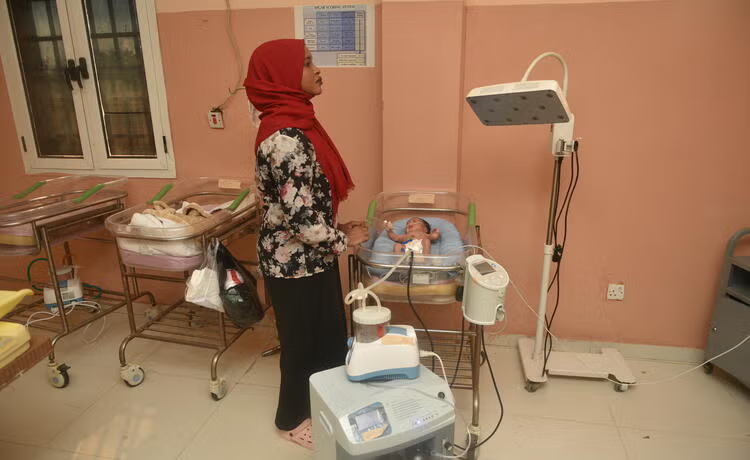
UNFPA has installed a solar power system to help address power outages at the maternity hospital, rehabilitated delivery rooms, and trained and deployed skilled health workers to assist with emergency obstetric and newborn care.
“Previously, the hospital didn’t have a neonatal intensive care unit,” said Dr. Babikir. “At the beginning of 2026, we opened one with only four beds, which are constantly occupied, and we urgently need to expand capacity.”
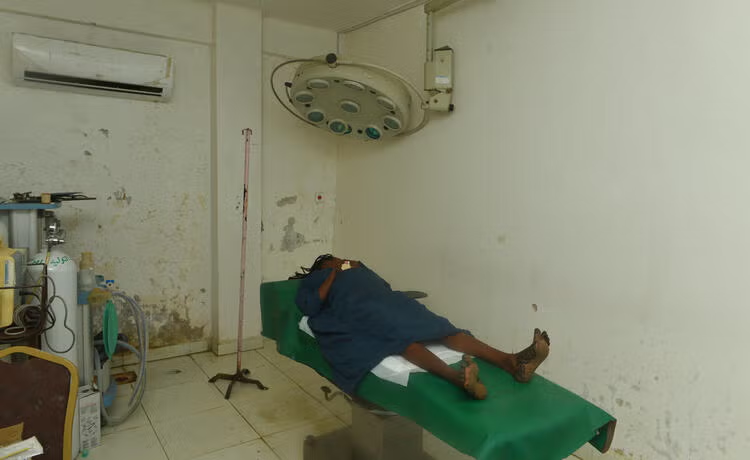
The increasingly severe conditions are also driving up maternal death rates. “We have lost patients due to prolonged waiting times. Although there are two emergency operating rooms, they are currently out of service. In many cases, emergency patients arrive while all rooms are occupied, sometimes resulting in the loss of the mother or fetus.”
Newborns’ lives are in danger too, said midwife Laila. “We don’t have tables to place newborns on, nor do we have adequate infection control equipment in the delivery rooms. The sterilization units for surgical instruments are not functioning. We lack basic supplies such as sterile cotton and gauze, and we don’t even have a baby scale.”
Health workers under pressure
UNFPA provides cash and voucher assistance to cover referral costs such as deliveries and cesarean sections, but the crisis is making it hard for health workers to do their jobs. “The salaries we receive are not enough to cover even basic transportation or the meals we need during our shifts,” explained Insaf, a senior midwife.
With equipment so limited, patients are often asked to buy the gloves, sterilized water, and medicines needed to serve them. “Many times women arrive without the means to purchase essential delivery supplies, and we find ourselves paying for these items out of our own pockets,” added Insaf.
Yet she and her colleagues are determined to keep delivering care. “Throughout the war and up to now, we have continued to receive women and girls displaced from all states. Some midwives are working 24-hour shifts to meet the overwhelming demand.”
“We continue to come to the hospital out of a deep sense of duty—we have never stopped working,” Insaf continued.
Responding amid soaring needs
Nearly three years of civil war have pushed more than 33 million people in Sudan into severe need of humanitarian aid. The conflict has been marked by horrific violence against women, kidnappings, and child marriage, with survivors struggling to access safe spaces or healthcare.
In the crowded Al Moaskar Al Mwahhad displacement camp in South Kordofan, UNFPA operates a mobile health clinic and a safe space for women and girls who are survivors or at risk of abuse.
Salma, 50, has been sheltering at the camp for eight months. “Women are exhausted from the war. Many crimes have been committed against women, including rape. Many women have been widowed. In this camp, the number of women who are still with their husbands can be counted on one hand.”
For Ismailia, 16, the crisis is affecting almost every part of her life—and her future. “We traveled by donkey for three days, and after that trucks brought us here. I hope to return to my town and my school. Please allow us to rebuild our home and go back.”
UNFPA is working across Sudan to deliver care to women and girls, including reproductive healthcare and protection for survivors of violence. To continue this work in 2026, UNFPA urgently needs $129 million—of which just $33 million has so far been pledged.