“I consider it a miracle”: The pregnant woman pulled from the rubble of Venezuela’s deadly earthquakes
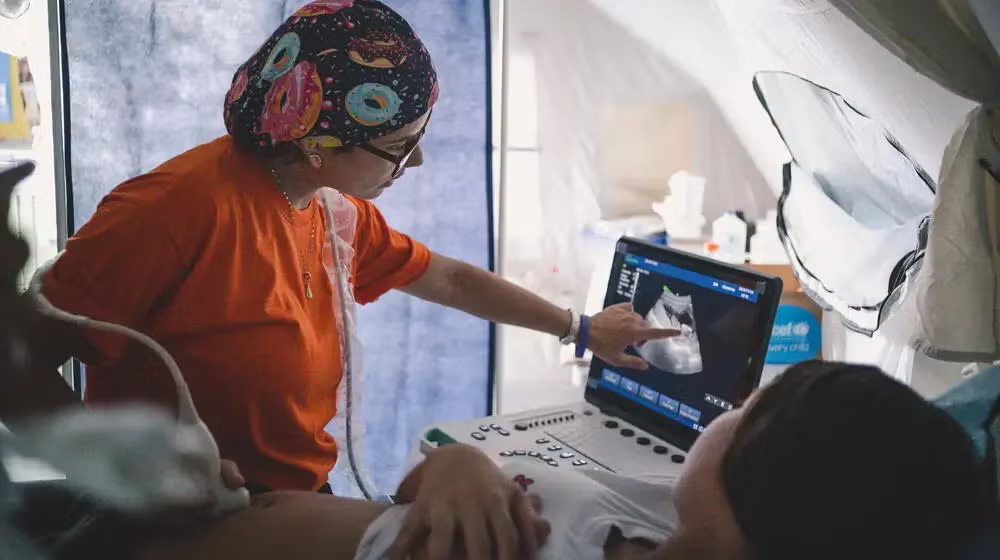
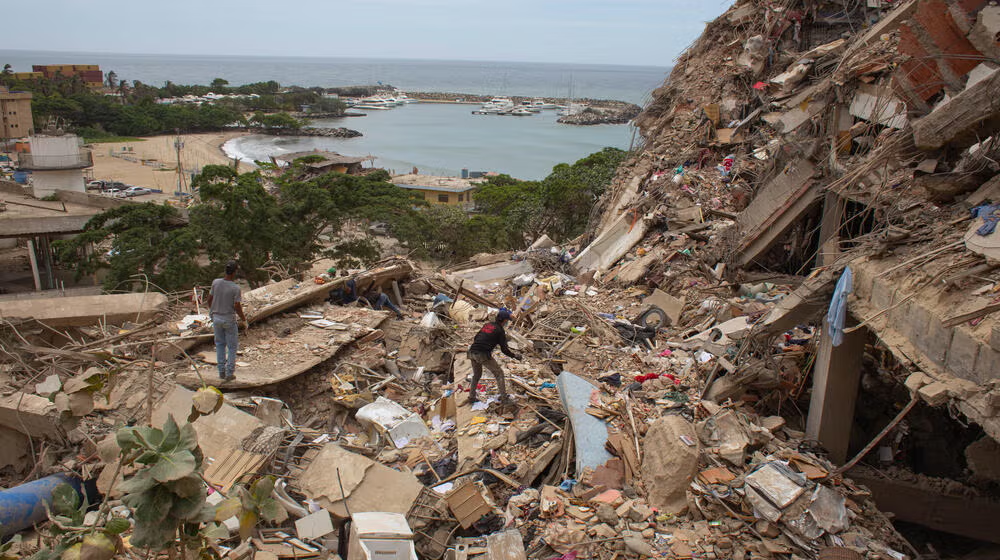
LA GUAIRA, Venezuela — “I saw the building collapse, floor by floor. You could hear people screaming and calling for help,” said Roberto, who survived two catastrophic earthquakes of magnitudes 7.2 and 7.5 that struck the central-northern region of Venezuela on June 24.
Roberto had just returned home but had yet to reach his apartment. “Bricks and pieces of debris started falling on me. I took off running, saw other people, and shouted, ‘Run, run!’ At that very moment, the entire building came crashing down,” he told UNFPA, the United Nations sexual and reproductive health agency.
“My partner was trapped under the rubble. She was pinned down from her feet downward, and the neighbors immediately began helping to get her out. It took us about two hours to free her.”
Although his partner Dayra was found and treated for her injuries, both Roberto’s father and young sister died in the disaster.
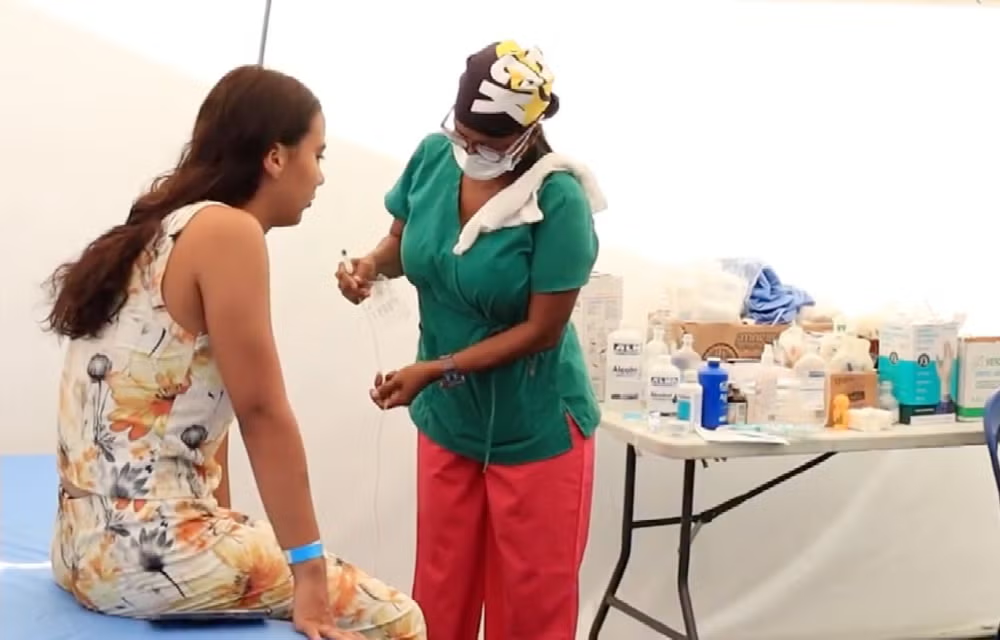
Almost 5,000 people have been killed and over 16,000 injured, while thousands still remain unaccounted for. An estimated 18,000 people have lost their homes, with temporary shelters set up for those displaced. Roberto and Dayra are currently staying at one set up at the José María Vargas sports complex, along with over 1,000 other displaced people.
Hope amid turmoil
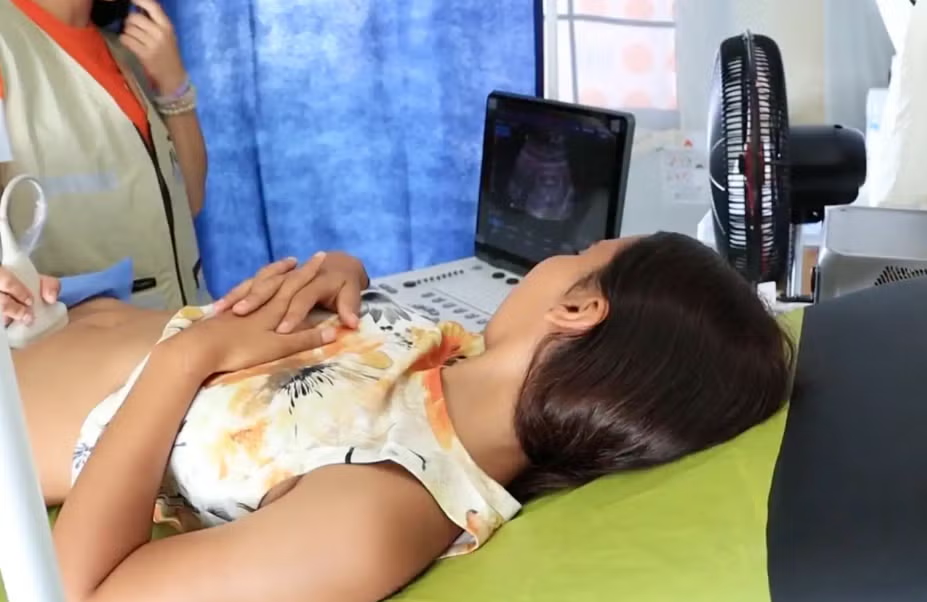
Dayra received medical care, health, and sanitary supplies from UNFPA—as well as a welcome surprise. “While we were here, on July 2, my father’s birthday, we found out through my partner’s medical examinations that she is pregnant,” said Roberto.
“Nothing happened to the baby, even after she fell from the sixth floor of a 12-story building and was trapped from the waist down under so much rubble. I consider it a true miracle.”
Dayra is among those receiving prenatal care from a UNFPA clinic in the shelter. In coordination with national authorities, UNFPA is providing vital sexual and reproductive health services across three shelters in Caracas, La Guaira, and Miranda. This includes prenatal consultations, distribution of contraceptive methods, testing for sexually transmitted infections, and referrals to hospitals for obstetric emergencies.
The support networks holding communities together
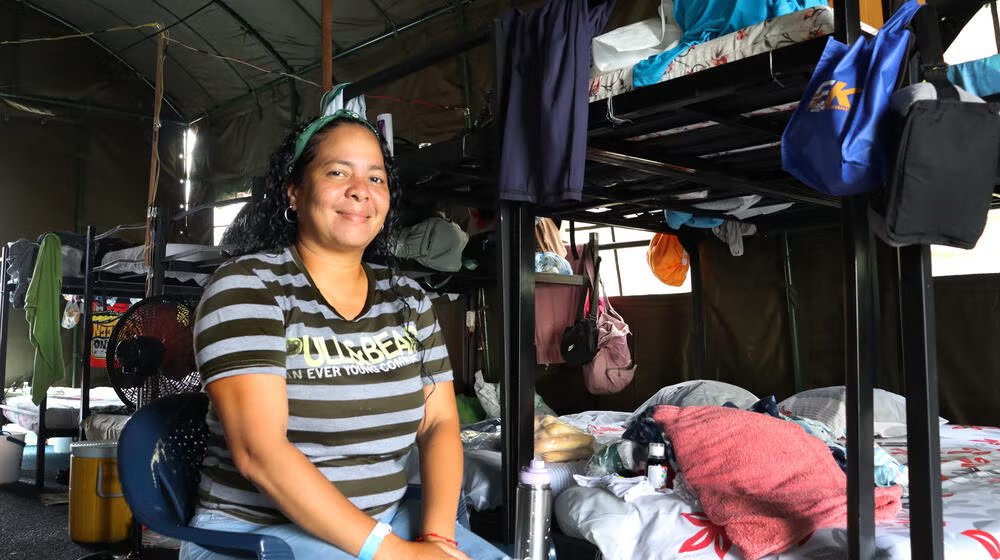
Among the volunteers is Yoseys, who is also sheltering at the José María Vargas sports complex along with her husband and son. “In the tent I’m staying in, twelve families live together. The number varies—some have fifteen, others twenty, and some have as many as twenty five families.”
She described her group as “one family,” with the women spearheading efforts to help people get back on their feet. “We are always looking for ways to help and support one another,” she told UNFPA. “So many women keep moving forward despite the pain, even after losing their homes, even after losing a family member.”
Like most survivors of the earthquakes, more than two weeks later Yoseys has yet to return home. Over 20,000 people have sought refuge in more than 100 temporary shelters, where overcrowding, limited essential services, family separation and rising distress are exacerbating protection risks.
As the designated representative of her tent, Yoseys has become an ally in raising awareness of violence against women. Through information sessions held by UNFPA and partners, she has learned about the services available to survivors and where to take them to access treatment, mental health support, case management and legal counseling.
“As in all humanitarian crises, strengthening gender-based violence prevention and ensuring safe access to survivor-centered services is critical,” said Eugenia Sekler, who heads UNFPA’s office in Venezuela. “We are distributing medical supplies to health providers for the clinical management of rape, as well as undertaking assessments at the shelters and working with the Government and partners to strengthen safety measures.”
Mobilizing from response to recovery
Yoseys fears the wider ramifications of the crisis will ripple on much longer still. “There are mothers here who have lost everything,” she said. “And when I say everything, I mean everything: their home, their mother, their children and their husband. Some are completely alone. Now they don’t have a home, they have nothing, but they’re alive.”
UNFPA is ensuring shipments of essential reproductive health supplies and medical equipment are being mobilized to support affected communities, as well as running several clinics in displacement areas.