A Year of Loss—and of Unbreakable Hope: 2025 in Review
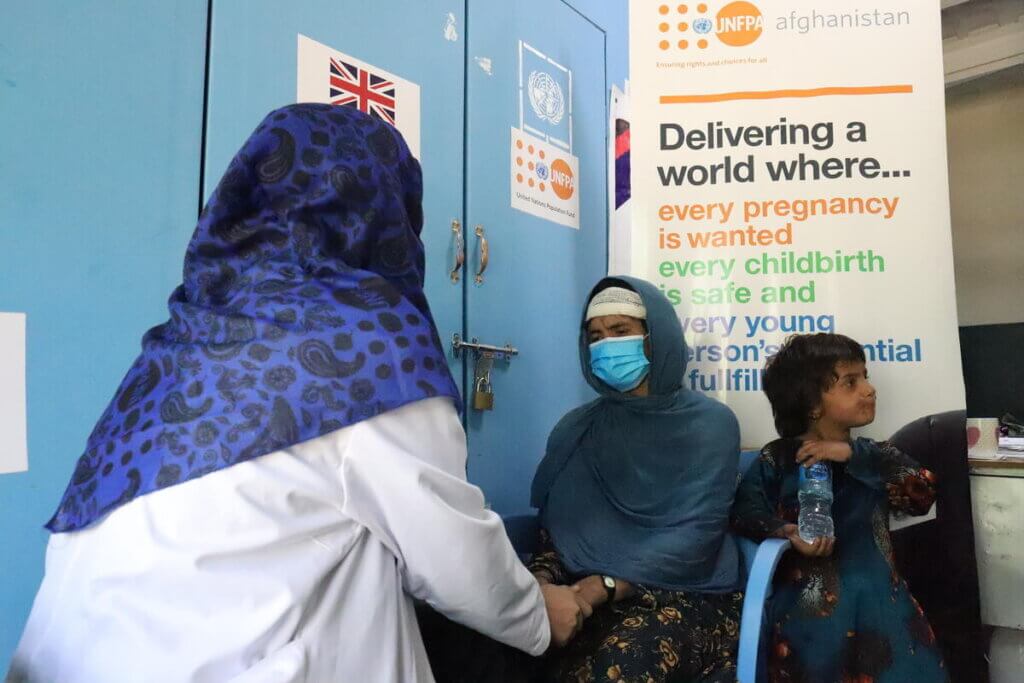
For many around the world, 2025 was a year full of devastating losses.
Around the world, conflicts, climate disasters, the worsening hunger crisis, and sudden cuts to humanitarian funding pushed health systems past their breaking point.
Without U.S. funding, millions of women and girls in humanitarian settings faced a new terrifying reality: maternity wards shuttered closed, clinics without supplies, pregnancies without care. Across hundreds of communities, the simple act of giving birth became a life-or-death risk.
And yet, even in a dark year, extraordinary light broke through.
Here are just a few of the lives you helped us reach and transform in 2025.
Three Stories of Hope in 2025
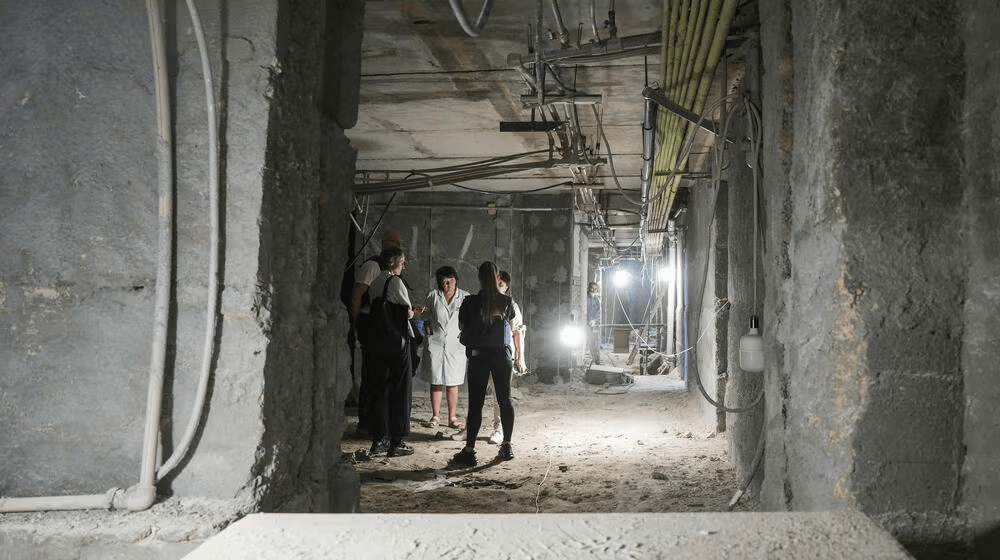
After nearly four years of constant shelling, Lyudmila knew she had just seconds to get underground.
If she had arrived at the maternity hospital a few months earlier, she would have had no choice but to give birth in the hospital’s bunker without access to proper supplies. But thanks to supporters like you, UNFPA was able to convert the hospital’s bunker into a fully functioning maternity ward earlier this year.
“It had no windows, but it felt safe,” Lyudmila shared with us afterward.
While she was giving birth, a close strike rocked the hospital’s foundation—but the doctors were determined to not lose their focus.
“There was a strike just at the moment when I was giving birth. The doctors said, ‘let’s continue,’ because my child was already coming out when the shelling began.”
Moments later, Lyudmila’s newborn daughter was born safely. Once the attack ended and both mother and daughter were confirmed to be stable, they were evacuated to another hospital where their treatment continued. Today, they are home and have recovered entirely from the harrowing delivery.
Deliveries such as Lyudmila’s are part of the new normal for health workers in Ukraine. Doctors and midwives have gotten skilled at operating in wards where electricity can fail at any moment, or air-raids and shelling can threaten operations. Dr. Heintz, an obstetrician working in a different UNFPA hospital in Ukraine, summed up this reality with a simple sentence:
“When the shelling starts, we just keep going.”
Thank you for showing up for women and girls in Ukraine in 2025, and for enabling stories such as Lyudmila’s to end in a hopeful beginning, not a tragedy.
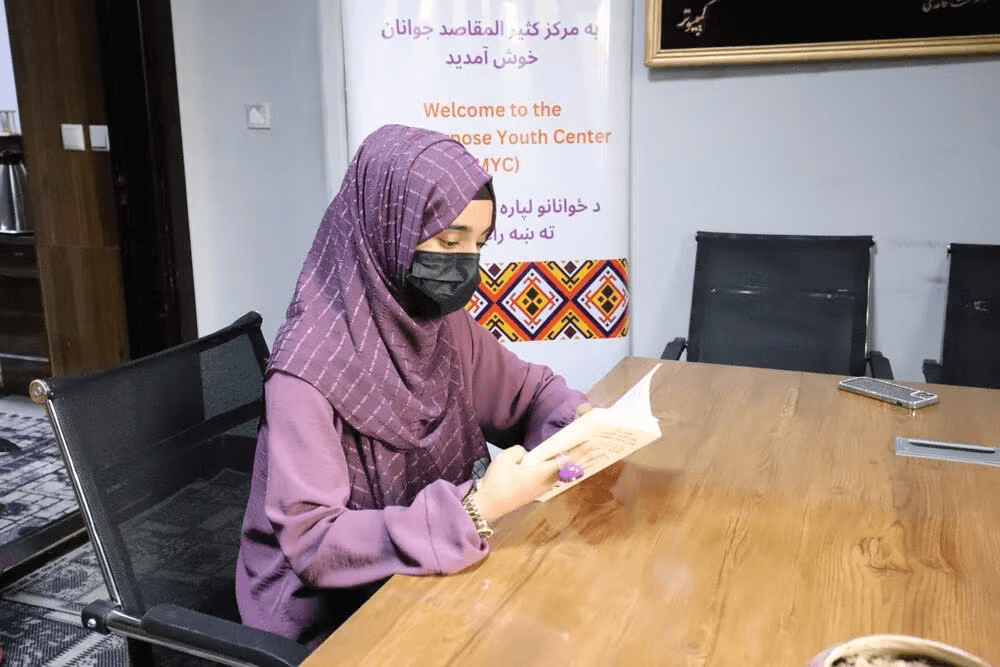
Meena always knew that she wanted to be a woman with a career—but when Afghanistan banned all girls from secondary education in 2021, she watched her dreams shatter. She did her best to continue studying at home, but her confidence quickly faded.
“I felt isolated and had no one to share my ideas with,” she shared.
But thanks to you, Meena did not remain isolated for long. In 2024, she heard about a UNFPA youth center at her local hospital. The center offered skills training and mental health counseling.
“There, I found good friends and a place where we could talk openly about our problems and find solutions together.”
After regaining her confidence and rebuilding her support network, Meena joined a training program in business development. This year, she launched her own online shop and continues to share the things she learned from her program with her neighbors and friends.
“The programs have completely changed my life. I learned techniques that gave me courage, and now I believe in myself. I feel hopeful about what lies ahead.”
Thank you for providing girls like Meena with the chance to learn, rebuild their communities, and transform their lives in 2025.

When Rana found out she was pregnant, she didn’t have the chance to feel joy and excitement. After two years of relentless attacks, Rana immediately felt fear—fear of not knowing if she would have a safe place to give birth, fear of not knowing if her and her child would even survive the delivery.
“I thought I would have to give birth in a tent,” she told us. Her concern was not unfounded. Of the 36 hospitals in Gaza, only 18 are partially functional. Very few of those that remain can provide emergency obstetric and newborn care.
“As my due date approached, I was terrified. I didn’t know how I could bring a child into this world under these conditions.”
With winter settling in, flooding and hypothermia became new things for Rana to worry about. But thanks to the support of this powerful community, when it came time for her to give birth, Rana had the support and expert care she needed.
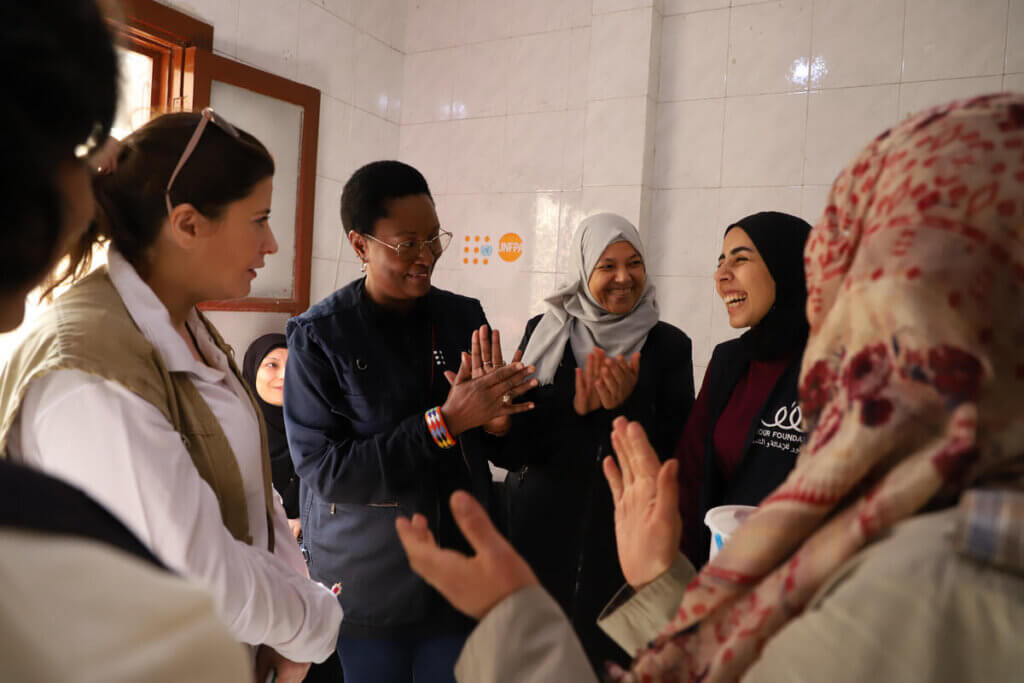
She gave birth at one of two recently rehabilitated UNFPA hospitals in Gaza City. Her midwife, a tireless woman named Nabila who has worked at the hospital since before it’s rehabilitation, helped Rana navigate her labor.
Afterward, Nabila shared with us how UNFPA’s rehabilitation of the hospital transformed her work and the outcomes for the women she treated.
“If a woman developed complications during childbirth, there was a real risk she wouldn’t survive. This support changed that. We were able to bring health workers back, cover their salaries, and replace equipment we had lost during the war.”
Thank you for helping us rehabilitate and support hospitals and clinics around the world that served as a lifeline for women like Rana.
The Care You Made Possible in 2025
In 2025, you helped provide lifesaving maternal care, desperately needed Dignity Kits, and safe spaces for women and girls facing violence and a restriction of rights. While we won’t have the full impact numbers for 2025 for a few months, we’re happy to share our 2025 humanitarian impact numbers with you today.
— Reach 6.2 million people with vital sexual and reproductive health services
— Fully support 770 mobile health clinics in 29 countries
— Assist 482,000 women safely deliver babies in UNFPA facilities
— Deliver 518,000 Dignity Kits in 40 countries
— Fully support 2,800+ health facilities and partially support an additional 2,300+ health facilities
— Train 9,000+ personnel on violence against women
— Support 360 youth-friendly safe spaces
— Support 1,300+ safe spaces for women and girls facing violence
By being a part of this community, you made a true, tangible impact for women and girls. However, 2025 was also a tough year for our continued work. In February of 2025, we lost all funding from the U.S. government—who had previously been one of the largest funder of our humanitarian work.
This loss, combined with other funding cuts and worsening humanitarian crises, meant that the need for our services far outpaced our resources this year. Over 10 million women and girls lost access to essential services, more than 1,000 health facilities and mobile health teams closed, 250+ safe spaces and centers shut down, and over 2,000 front-line health and protection workers lost their jobs overnight.
We cannot allow these losses to continue in 2026.
Thank you for being such an integral part of our team in 2025, but in the face of so many cuts, we must count on you once more in 2026. If you would like to start out 2026 with a donation to our lifesaving work, you can make a gift here.